
A mid-winter pool check takes about 20 minutes, costs nothing, and can save you hundreds of dollars at opening. The things that cause expensive spring surprises – algae blooms, stained surfaces, cracked equipment, blown-out covers – almost always start as small, fixable problems in January or February. Check your water level, test your chemistry, inspect the cover, and eyeball your equipment once a month from closing to opening. That’s the whole job.
Most pool owners close the pool in October, breathe a sigh of relief, and don’t think about it again until April. That’s understandable. But a pool isn’t a parked car – it’s a living chemical system sitting outside through freezing temps, heavy rain, snow, and fluctuating temperatures. Things change. And if you only find out how much things changed when you pull the cover off in spring, you’re already behind.
Why Mid-Winter Checks Actually Pay Off
The math is simple. A bottle of algaecide or a pound of shock in February costs a few dollars. Treating a full green pool in May, after the algae has had months to establish itself, can cost $50 to $150 in chemicals alone, plus the extra time and hassle. Acid washing a stained plaster surface because pH ran low all winter runs $300 to $600. A cracked pump housing from a freeze event that nobody noticed in time can be $200 to $500 to replace. Prevention is genuinely cheaper every time.
What Should You Check on a Winter Pool Walkthrough?
Water level. This is the most important one. Your water level should sit about halfway up the skimmer opening (or wherever your pool professional set it at closing). Too low and you risk exposing plumbing lines to air pockets and freeze damage. Too high and you put stress on the cover and risk water getting into the skimmer and freezing. After heavy rain or snowmelt, check that level. A submersible pump can drop it back down in an hour if it’s gotten too high.
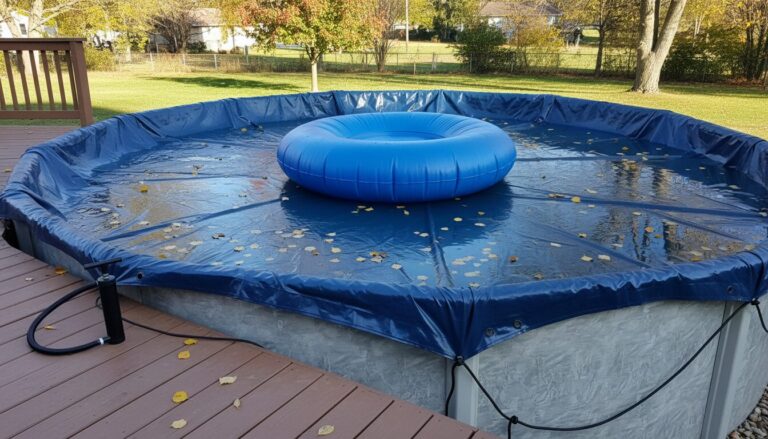
Cover condition. Walk the perimeter and look for sagging, tears, pulled anchors, or areas where water has pooled heavily on top. A few inches of water sitting on a solid cover is fine and actually helps hold it in place. More than 6 to 8 inches is putting real strain on the material. Pump it off. A small cover tear that you catch now is a $20 patch kit. A cover that’s been pulling at its anchors all winter and finally blows off during a February storm is a much bigger problem – and as we’ve covered before, this one pool cover mistake could ruin your opening if it goes unnoticed long enough.
Water chemistry. Yes, even in winter. You don’t need a full 5-way test every month, but check pH and chlorine at minimum. Target pH between 7.2 and 7.6, and free chlorine between 1 and 3 ppm. Low pH eats at plaster and metal fittings. Low chlorine lets algae get a foothold. Both problems are quiet during winter and loud in spring. If you need to make a small adjustment, a short-term circulation run of 4 to 6 hours with your pump will distribute it without much fuss.
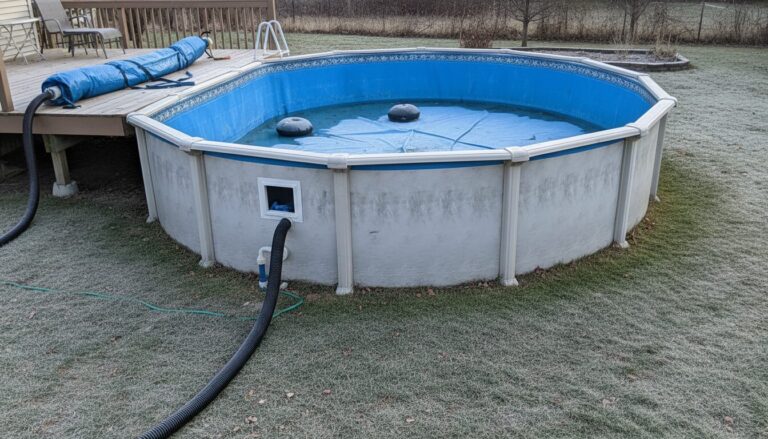
Equipment and plumbing. Take a look at your pump, filter, and heater housing. Check for visible cracks, frost damage, or anything that looks like it shifted since closing. If you have a natural gas heater, make sure the cover or tarp hasn’t fallen against the exhaust. Make sure any winterizing plugs are still seated in the return jets. This takes five minutes and can catch a freeze crack before it becomes a catastrophic leak you don’t discover until startup.
How Do You Test Pool Chemistry in Winter?
Use a basic liquid test kit or test strips and sample water directly from under the cover edge – lift a corner carefully and dip a sample cup in about 12 inches below the surface. Don’t test the water sitting on top of the cover; that’s rain and condensation, not pool water. A sample from depth gives you an accurate read of what’s actually happening in the pool. AquaDoc makes a winterizing kit that pool owners use specifically for this kind of off-season maintenance dose, so you’re not having to cobble together partial bottles of leftover chemicals from closing.
What Are the Most Common Mid-Winter Problems?
- Algae starting under the cover. Algae grows in water as cold as 50 degrees Fahrenheit. If your chlorine dropped below 1 ppm after closing, you may already have early algae growth. A slight green or yellow tint to the water when you test is the warning sign. Shock it now – 1 lb of calcium hypochlorite per 10,000 gallons – and run the pump for 8 hours to distribute.
- pH drift. Rainwater and snowmelt are acidic. Over a winter, they can pull your pool’s pH below 7.0 without any visible warning. Low pH corrodes metal fittings, etches plaster, and makes any chlorine you have less effective. A small dose of pH increaser corrects it in one pump cycle.
- Cover degradation. Mesh covers let water through by design, but solid covers that are aging start to develop micro-tears that let debris through. If your cover is more than 10 years old, inspect it carefully every single month. The grime that accumulates on and under an old cover is part of why your winter cover is full of filth and guilt by the time spring arrives.
- Water getting into equipment. If you live somewhere that gets freeze-thaw cycles, check that your equipment pad hasn’t shifted. Standing water near pump or filter housings that then freezes can crack a housing even when the internals are properly winterized.
How Long Does a Mid-Winter Check Take?
Plan for 20 to 30 minutes start to finish. Walk the cover perimeter, check the water level visually, pull a water sample and test it, scan the equipment pad, and you’re done. If everything looks good, you log it and walk away. If something needs attention, you’ve caught it early when it’s still cheap to fix. Do this once a month from November through March and you’ll have a very different spring opening experience than the one where you pull the cover off and find a swamp.
If that scenario sounds familiar, we’ve been there too – the full story of what it looks like to open the pool and see a swamp is worth reading before spring, so you know what you’re dealing with if a check gets missed.
Frequently Asked Questions
How often should I check my pool in winter?
Check your pool at least once a month during winter. A quick 20-minute walk-around is enough to catch water level issues, cover problems, and early algae signs before they become expensive repairs.
What should my pool water chemistry be in winter?
Keep pH between 7.2 and 7.6, alkalinity between 80 and 120 ppm, and free chlorine between 1 and 3 ppm even in winter. Water that drifts out of range during the off-season corrodes equipment and stains surfaces.
How much water should be under my pool cover in winter?
A few inches of rainwater on a solid cover is normal and even helps weigh it down. More than 6 to 8 inches adds enough weight to strain the cover and the anchoring system, so pump it off when it reaches that level.
Can algae grow in a pool during winter?
Yes. Algae can grow in water temperatures as low as 50 degrees Fahrenheit, especially if chlorine levels have dropped. A mid-winter check of your sanitizer level can prevent a full algae bloom from developing under the cover.
Do I need to add chemicals to my pool in winter?
Sometimes, yes. If your pH or chlorine has drifted out of range during a mid-winter test, a small corrective dose now costs far less than treating an algae bloom or acid-washed surface in spring.
The best spring opening you’ll ever have starts with a few quiet February checks. The pool doesn’t need much from you in the off-season – just don’t ignore it completely.