CareFree Pool Club
Your pool’s new best friend.
-

How Many Gallons Is a 15×30 Inground Pool? Volume by Depth and Chemical Dosing
A 15×30 inground pool holds anywhere from about 10,100 gallons at 3 feet to over 20,000 gallons with a deep end. Knowing your exact volume is the single most important number for getting chemical doses right. This post walks through the math, depth-by-depth, and shows exactly what that number changes at the chemical level.
-

Muriatic Acid for a 20,000-Gallon Pool: Correct pH 7.8 After Opening
Opening your pool and seeing a pH of 7.8 is one of the most common post-winter readings you’ll hit. This article walks through the exact muriatic acid dose for a 20,000-gallon pool, how to add it safely without damaging your cartridge filter, and what to check before and after.
-

How Much Stabilizer a 20,000-Gallon Pool Loses Over a Full Swimming Season
Stabilizer doesn’t evaporate, but your pool still loses it every season through splash-out, backwashing, and rain dilution. A 20,000-gallon pool can shed 30 to 60 ppm of CYA or more over a single summer. Here’s the exact math and what to do about it.
-

Baking Soda Dose for Closing a 20,000-Gallon Pool: Hit 80-120 ppm Alkalinity
Before you put the cover on a 20,000-gallon pool, total alkalinity should sit between 80 and 120 ppm. This post gives you the exact baking soda dose for every starting level, plus a worked example so you can calculate it yourself.
-

Trichlor Shock for a 25,000-Gallon Saltwater Pool When the Salt Cell Is Offline
When your salt cell goes offline, your saltwater pool loses its chlorine source fast. This guide gives you the exact trichlor shock dose for a 25,000-gallon pool, explains the CYA risk that comes with using trichlor in a salt pool, and walks you through the process step by step.
-
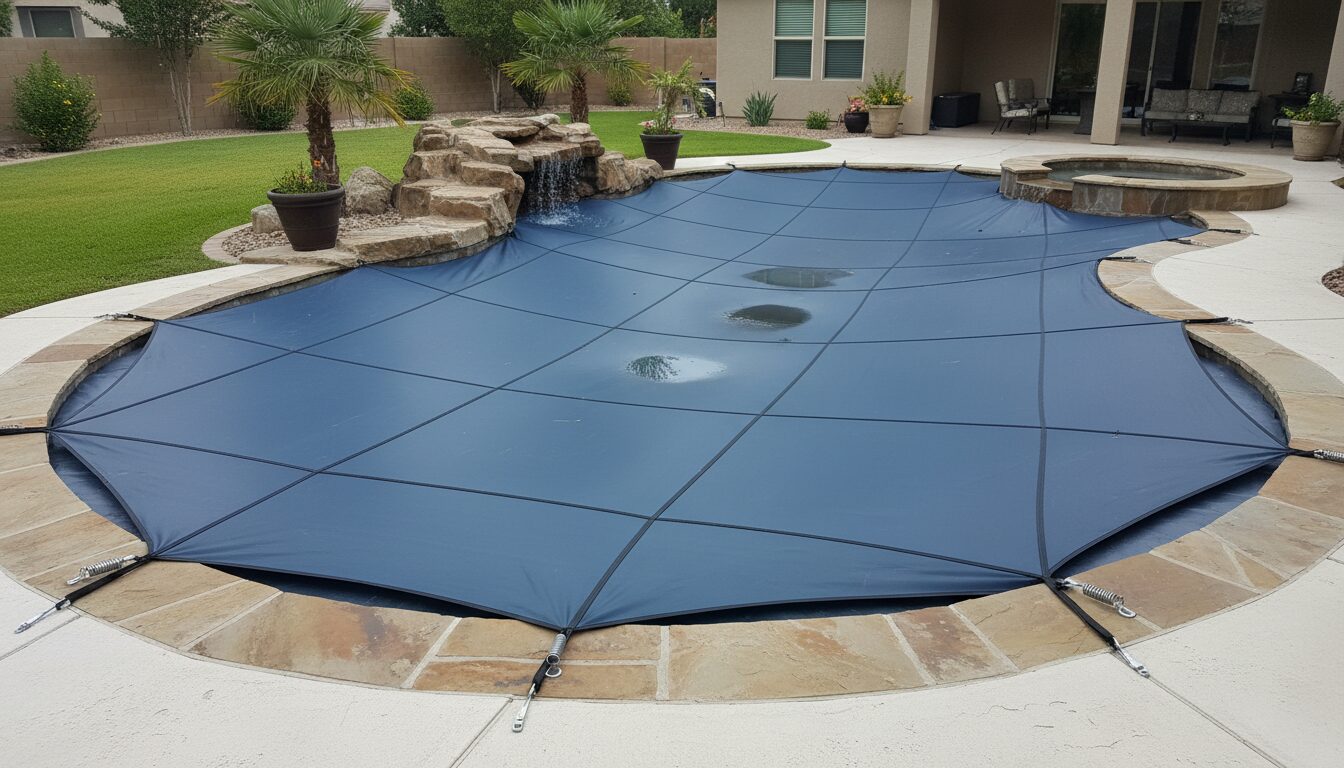
Safety Pool Cover Cost for an Irregularly Shaped Inground Pool
A custom safety cover for an irregularly shaped inground pool typically costs between $1,800 and $6,500 installed, depending on pool size, cover material, and how complex the shape is. This breakdown explains what drives the price, what options you have, and how to get an accurate quote for a freeform or kidney-shaped pool.
-
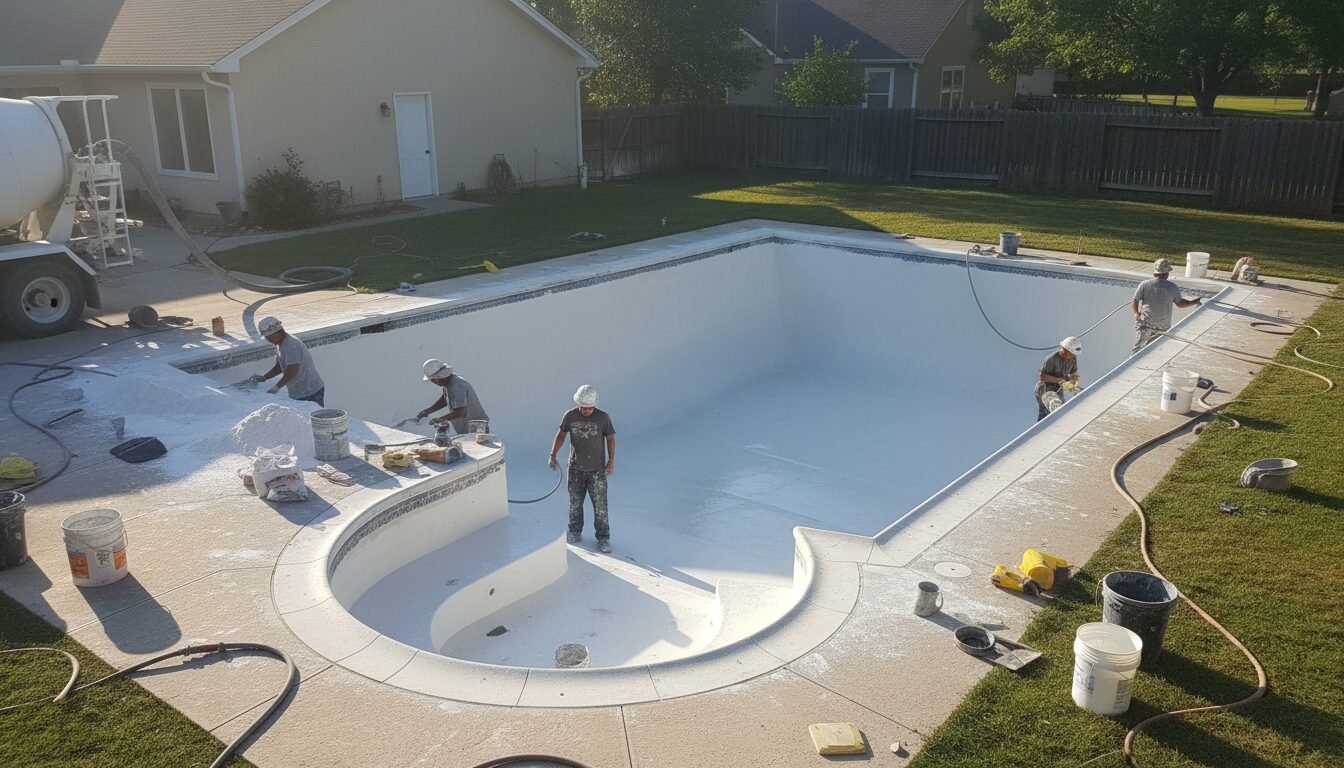
16×32 Inground Pool With Wading Pool Replaster Cost: Full Breakdown
Replastering a 16×32 inground pool with an attached wading pool runs $6,500 to $14,000 or more depending on finish, surface area, and condition. This breakdown covers every cost factor, from standard white plaster to pebble finishes, plus what the wading pool adds to the total.
-
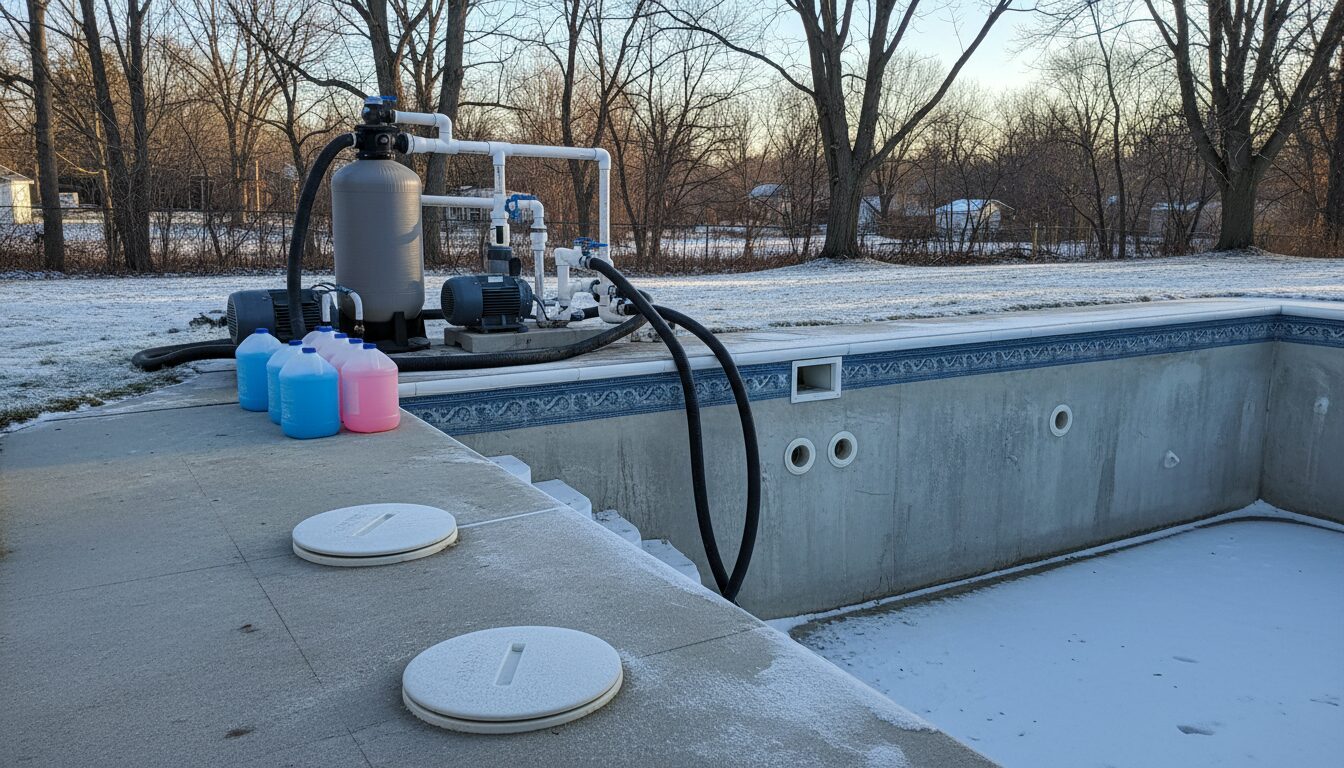
Pool Antifreeze for a Main Drain, Two Skimmers, and Four Returns: Exact Amounts
Figuring out how much antifreeze to buy for closing a pool with a main drain, two skimmers, and four returns doesn’t have to be guesswork. This guide breaks down the math line by line so you buy exactly what you need, nothing more and nothing less.
-
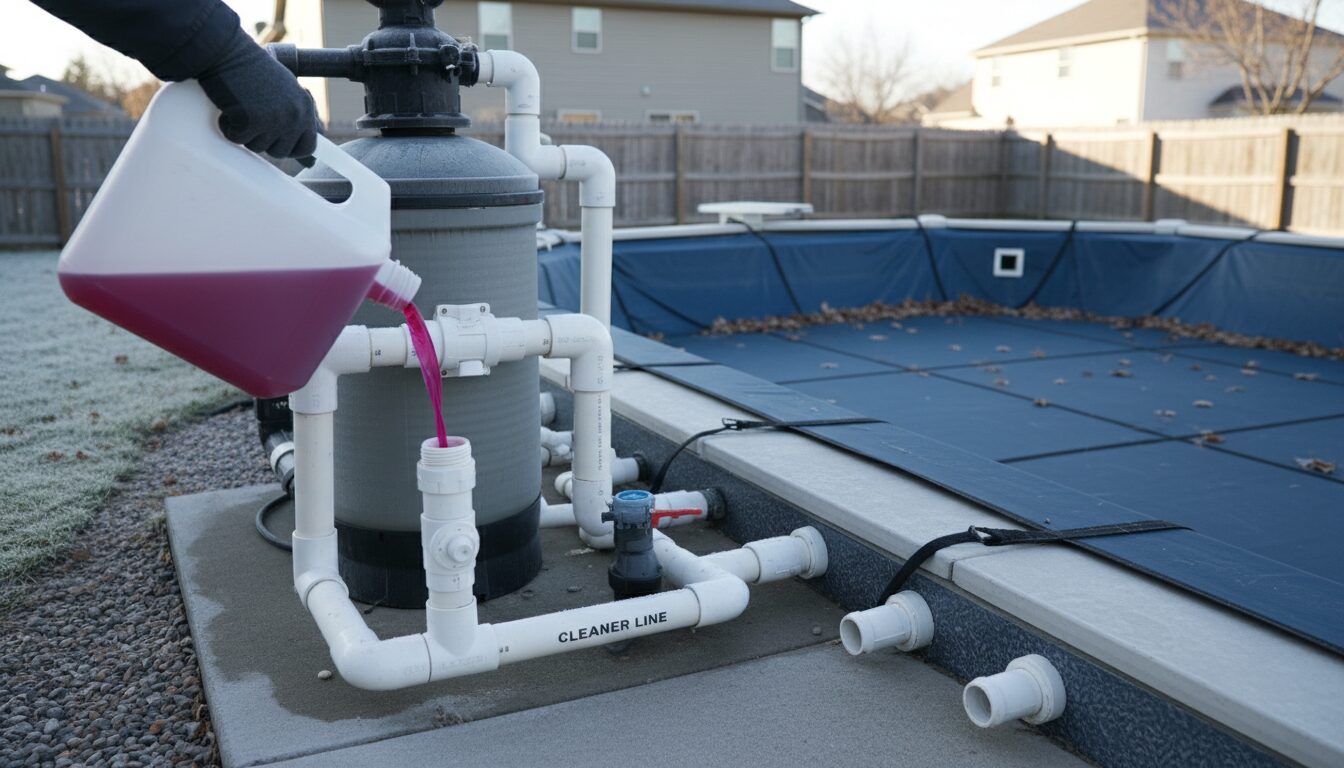
Pool Antifreeze for a Separate Cleaner Line and Three Return Jets: Exact Amounts
A pool with a separate cleaner line and three return jets has more pipe volume to protect than a basic two-return setup, and most guides skip the math. This post works through exact antifreeze amounts by pipe diameter and line length so you leave nothing exposed to a freeze.
-
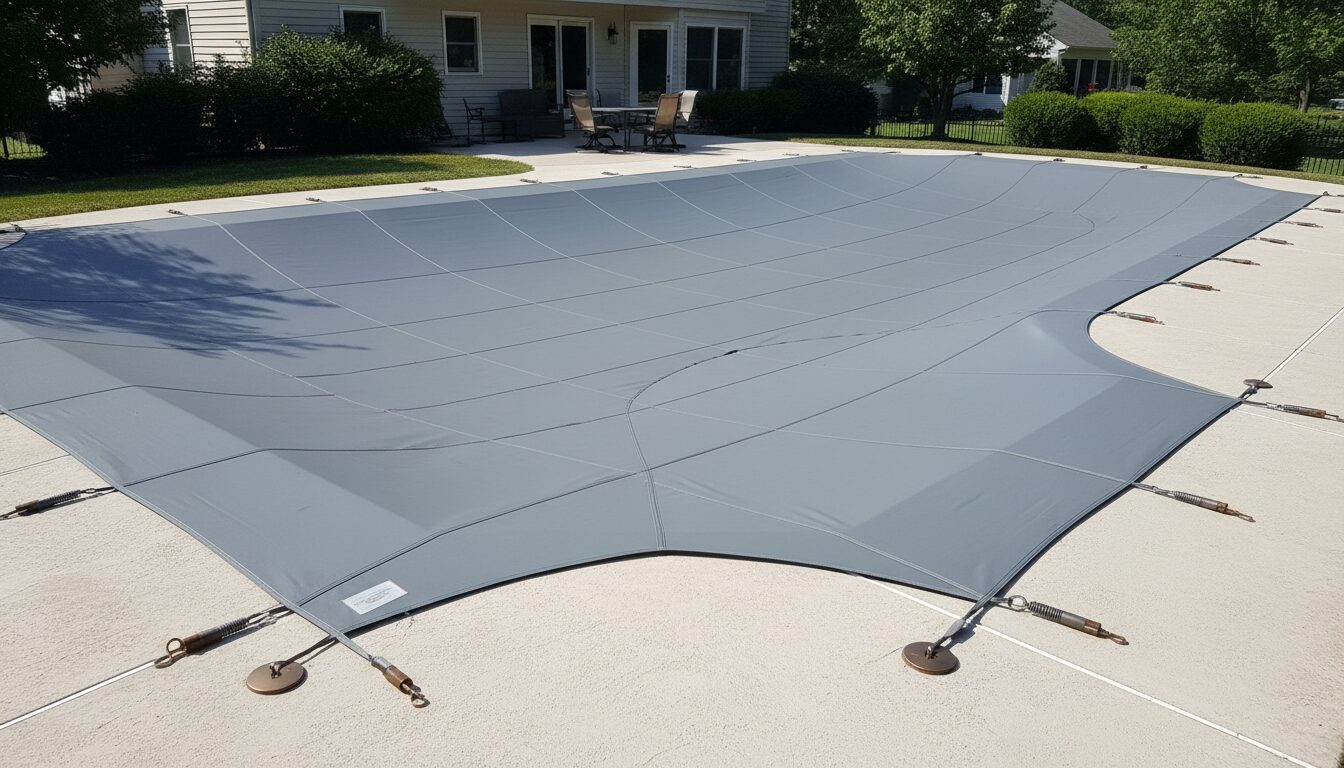
Safety Cover Installation Cost for a 16×32 Inground Pool With Irregular Steps
Installing a safety cover on a 16×32 inground pool with irregular steps costs more than a standard rectangle job – mainly because the steps require a custom cutout or separate step cover. This breakdown covers material costs, labor, anchor drilling, and what drives the price up.
Categories

Pool Chemistry
pH, alkalinity, chlorine… yeah, we’ll make it make sense.
Pool Opening & Closing
If your pool looks like a swamp, we’ve got a shovel.
Pool Equipment & Parts
Everything you need in one place.
-
Shocked Your Pool and It’s Still Murky? Do This Now
Let me guess. You finally got around to shocking your pool. Maybe it was after a weekend party, a storm, or just a moment of clarity where you remembered your water looked like it came from a swamp. You threw in some shock, probably patted yourself on the back, and expected the pool to reward…
-
The Curious Case of the Cloudy Pool That Wouldn’t Clear
It was a quiet Thursday morning when the call came in. The client said they had shocked their pool the night before. A textbook move, done right after a long weekend of sunblock, sweaty cannonballs, and maybe a spilled drink or two. But now the water looked like cold broth. Suspicious. Very suspicious. My job…
-
Your Pool Smells Like a Swamp? Here’s How to Fix It
You waited all winter for this moment. You peeled off the cover with a sense of anticipation, maybe even pride. But instead of the sparkling water you dreamed about, you were hit with a stench that could knock out a raccoon and water so green it looked photoshopped. Welcome to pool opening season. And unfortunately,…
Pool FAQs
Why does my pool keep getting cloudy?
It’s either too much junk in the water or not enough love. Check your filter, shock the pool, and test your chemicals. It’s not ghosts. Probably.
How often should I test my pool water?
Ideally twice a week. Or whenever you look at the pool and go, “Hmm… something’s off.” If your kids come out smelling like a bleach factory, that’s too late.
What should I do if algae shows up?
Shock it. Brush it. Laugh at its defeat. Then keep your chlorine levels up so it doesn’t come back like a bad sequel.
Can I just use bleach instead of chlorine?
You can. But only if you’re okay with playing chemist and potentially ruining your liner. Stick to pool-grade chlorine unless you love chaos.
How often should I backwash my filter?
When the pressure gauge says so, or when your filter looks like it’s trying to inhale concrete. Once a week is a decent rhythm.
Do I really need to vacuum the pool if I have a skimmer?
Yes. That skimmer’s not picking up the sand, grit, and toddler snack crumbs at the bottom. Suck it up. Literally.
What’s the ideal chlorine level?
1 to 3 ppm. Less than that, and it’s a bacteria rave. More than that, and you’re swimming in eye bleach.