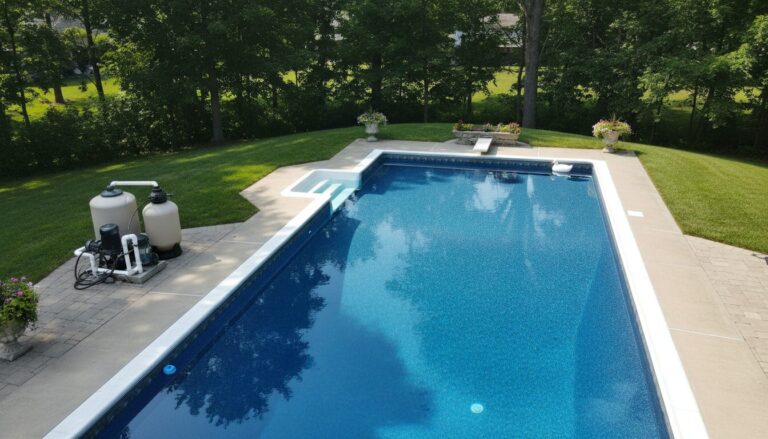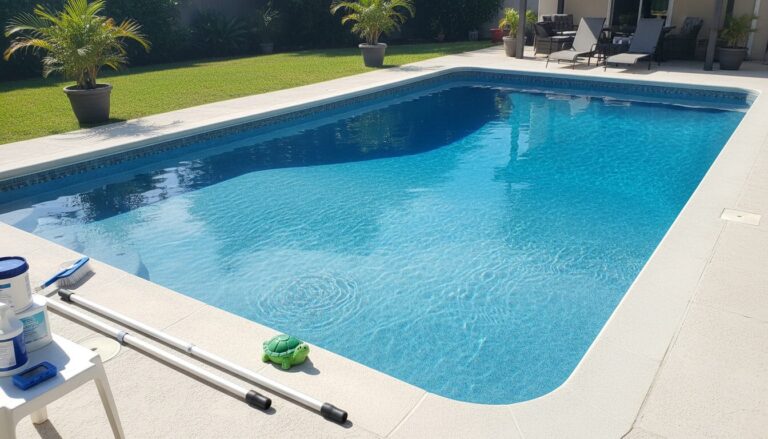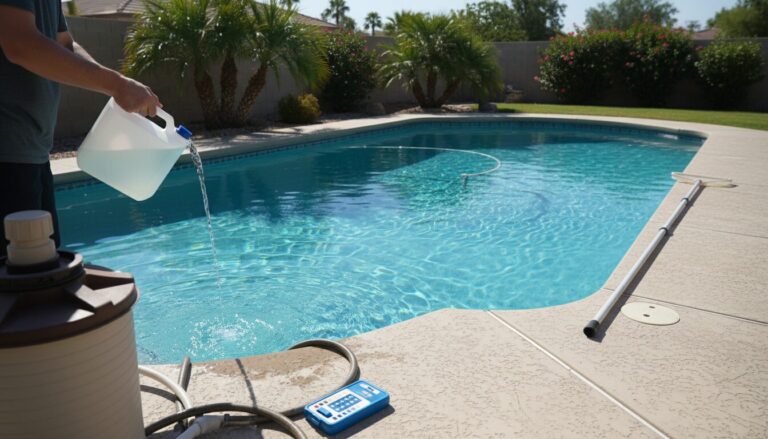

When you first fill an above-ground pool, add chemicals in this order: total alkalinity first, then pH, then calcium hardness (if needed), then chlorine, then shock. Skipping ahead or adding shock to unbalanced water wastes product and can cloud your water for days. The whole process takes 24-48 hours, not 2 hours. Here is what to actually do, step by step, so your first swim goes smoothly instead of sideways.
Why the Order Actually Matters
Pool chemistry is not a list of ingredients you can add in any sequence. Each parameter affects the others. Total alkalinity acts as a buffer for pH – if alkalinity is off, your pH will bounce around no matter how much pH adjuster you pour in. Chlorine efficiency drops sharply above pH 7.8, so adding sanitizer before you fix pH means a significant portion of it does nothing useful. Get the foundation right first and the rest of the process is much easier and cheaper.
Before You Even Start Filling: Site Prep Matters
Level ground is not optional – it is structural. A 24-foot round pool holding 13,000 gallons of water weighs over 100,000 pounds. Even a 2-inch slope across the pool floor puts uneven stress on the liner and frame walls. Use a long level and take measurements at multiple points before you add a drop of water. If the ground is off by more than 1 inch across the diameter, fix it now. Re-leveling after filling is a full teardown.
Clear the area of any sharp objects: rocks, roots, sticks, hardware. Lay a ground cloth or foam padding under the liner. This is not about comfort for swimmers – it is about protecting the liner from punctures and abrasion. A liner replacement runs $150-$400 or more depending on size, so a $20 ground cloth is an obvious investment.
What Is the Right Order to Fill and Treat the Water?
Follow these steps in sequence. Do not rush from one to the next – each chemical needs time to circulate and register on a test before you move forward.
- Fill the pool halfway, then run your pump and filter. Confirm everything is working before you have a full pool to deal with. Check for leaks at fittings and make sure the pump is primed and circulating.
- Test your source water. Tap water varies by region. Some municipal supplies come in at pH 8.0+. Some well water has calcium hardness over 400 ppm right out of the ground. You need a baseline before you add anything. Use a drop-test kit or a liquid test kit – not strips if you can avoid them, since strips are less reliable.
- Finish filling to the target level (typically halfway up the skimmer opening).
- Adjust total alkalinity first. Target 80-120 ppm. Use sodium bicarbonate (baking soda) to raise it, or muriatic acid to lower it. Add in increments, circulate for 4+ hours, and retest before adding more.
- Adjust pH second. Target 7.4-7.6. Use sodium carbonate (soda ash) to raise pH, or muriatic acid to lower it. With alkalinity in range, pH adjustments will hold much better.
- Adjust calcium hardness if needed. Target 150-250 ppm. Soft water (below 150 ppm) is corrosive to liners and metal parts. Add calcium chloride to raise it. If your source water is already above 300 ppm, note it but do not panic – above-ground vinyl pools tolerate higher calcium better than plaster pools.
- Add a stabilizer (cyanuric acid) if using chlorine tabs or granular chlorine outdoors. Target 30-50 ppm CYA. Without it, UV destroys your chlorine within hours. Add stabilizer through a sock hanging in front of a return jet, not directly into the skimmer.
- Add chlorine to establish a sanitizer residual. Target 2-4 ppm free chlorine.
- Shock the pool. Use 1 lb of calcium hypochlorite shock per 10,000 gallons. Add it after sunset to prevent UV from burning it off before it can work. Circulate overnight. Wait until free chlorine drops back to 1-3 ppm before swimming – typically 24 hours.
For a more detailed breakdown of what happens chemically during those first few weeks, the first 30 days with your new above-ground pool is worth reading once your water is stable and you are settling into a routine.
Common First-Fill Mistakes (and How to Avoid Them)
Adding shock before balancing pH. Shock at high pH is largely wasted. Calcium hypochlorite in water with pH above 7.8 loses a large fraction of its effectiveness. Balance first, shock second.
Dumping chemicals in at the same spot. Always add chemicals to the water while the pump is running, and spread additions around the pool or add them in front of a return jet. Concentrated chemical sitting on the liner can bleach or damage it.
Testing too soon after adding chemicals. Circulation time matters. Retest no earlier than 4 hours after any addition, and ideally after a full pump cycle. Testing 20 minutes after adding alkalinity increaser gives you a misleading number.
Skipping the source water test. If your tap water comes in with pH 8.2 and 250 ppm alkalinity, your adjustment plan looks completely different than if it comes in at pH 7.0 and 60 ppm alkalinity. Never assume.
What Equipment Should Be Running During Setup?
Run your pump and filter continuously for the first 48-72 hours. Circulation is what distributes the chemicals evenly. A pool that is not circulating while you are adjusting chemistry is a pool where one corner might have dramatically different chemistry than another. After the initial startup period, getting your pump run time dialed in becomes one of the most important ongoing decisions you will make – run too little and chemistry drifts, run too much and your electric bill climbs unnecessarily.
AquaDoc makes a pool startup kit designed for this exact sequence, with pre-measured doses for common above-ground pool sizes – it is the kind of thing that removes the guesswork when you are staring at six different bottles for the first time and not sure how much of each one to use.
When Is the Water Actually Ready to Swim In?
Your pool is ready to swim in when free chlorine is between 1-3 ppm, pH is between 7.2-7.8, and combined chlorine (chloramines) is below 0.5 ppm. Do not rely on the water looking clear as your indicator – water can look great and still have chemistry that will irritate eyes and skin. Use a proper test kit and hit all three numbers before anyone gets in.
Most first fills are swim-ready 24-48 hours after you start adding chemicals, assuming you work through the steps in order and circulate properly between additions. Budget two full days to do it right and you will not be disappointed.
Frequently Asked Questions
What chemicals do I add first when filling an above-ground pool?
Start with total alkalinity, then pH. Get alkalinity to 80-120 ppm and pH to 7.4-7.6 before adding anything else. Chlorine and shock come after water balance is established – adding them before wastes product and can cause cloudy water.
How long does it take to fill an above-ground pool with a garden hose?
A standard garden hose runs about 9-10 gallons per minute. A 10,000-gallon pool takes roughly 16-18 hours to fill. Plan to start filling the night before you want to balance and treat the water.
Do I need to shock a brand-new above-ground pool before swimming?
Yes. Even fresh tap water needs a shock treatment to establish a sanitizer baseline and oxidize any organics present. Use 1 lb of calcium hypochlorite per 10,000 gallons after balancing pH and alkalinity, and wait until free chlorine drops to 1-3 ppm before swimming.
What should pool pH be after first fill?
Target 7.4 to 7.6. Below 7.2, the water irritates eyes and can corrode metal fittings. Above 7.8, chlorine loses a large portion of its effectiveness, which means you burn through sanitizer faster while getting less protection.
Can I swim the same day I fill my above-ground pool?
In most cases, no. You need time to balance alkalinity, adjust pH, add chlorine, shock the pool, and let everything circulate and stabilize. Plan on 24-48 hours from the time you start adding chemicals before the water is balanced and safe to swim in.