
Run your pool pump long enough to turn over the full volume of water at least once every 24 hours. For most residential pools, that means 8 hours per day as a solid baseline. Smaller pools with efficient variable-speed pumps might get there in 6 hours. Larger pools, pools with heavy use, or pools fighting algae may need 10 to 12. If you have never done the turnover math for your specific pool, you are either wasting money on electricity or setting yourself up for water problems.
What Is Turnover Rate and Why Does It Matter?
Turnover rate is the time it takes your pump to push the entire volume of your pool through the filter once. Water that is not moving is not being filtered, not being sanitized evenly, and not distributing the chemicals you added. Dead zones form in corners and around steps where chlorine is low and algae spores are happy. Running your pump enough to turn the water over at least once daily is the minimum standard most pool professionals recommend.
The formula is simple: divide your pool’s volume in gallons by your pump’s flow rate in gallons per hour (GPH). That gives you the minimum hours needed for one full turnover. A 20,000-gallon pool with a pump that flows 40 GPM (2,400 GPH) needs about 8.3 hours to turn over completely. Round up, not down.
How Do You Calculate Your Pool’s Volume?
You need your pool’s volume to do this right. For a rectangular pool, multiply length x width x average depth x 7.5 to get gallons. For a round pool, use: diameter x diameter x average depth x 5.9. Oval pools: long diameter x short diameter x average depth x 6.7. If you have an irregular shape, break it into sections and add them up. Most above-ground pools fall between 5,000 and 15,000 gallons. Most in-ground pools are 15,000 to 30,000 gallons.
Your pump’s flow rate is usually printed on the motor label or in the manual. Keep in mind that the rated GPM is measured at zero resistance, and your actual flow will be lower once you account for filter resistance, pipe runs, and elevation. A pump rated at 60 GPM might deliver 40-45 GPM in real-world conditions. When in doubt, assume the lower end of the rated flow range for your calculation.
Does the Type of Pump Change the Answer?
Absolutely. Single-speed pumps run at one speed – full blast, all the time. If yours falls into that category, 8 hours is a reasonable daily target for an average-size pool. Variable-speed pumps (VSPs) change the math entirely. Running a VSP at a lower RPM for 12-16 hours can move the same amount of water as a single-speed running for 8 hours, while using significantly less electricity. Many variable-speed pump owners find that running at 1,500-2,000 RPM for 10-12 hours is both more effective and cheaper than running a single-speed pump for 8 hours at full speed.
If you are still running a single-speed pump and paying high electric bills, the variable-speed upgrade is worth the math. River Pools and Spas has covered the real-world savings in detail, and the payback period on a VSP is often 2-3 years depending on your local electricity rates.
When Should You Run Your Pump More Than Usual?
There are a handful of situations where your normal schedule is not enough. During an algae outbreak, run the pump continuously until the water clears. After shocking your pool, run it for at least 8 hours to circulate the shock and avoid bleaching your liner or steps from concentrated chemical sitting in one spot. During a heat wave, algae growth accelerates and your chlorine burns off faster, so adding 2-3 hours to your daily schedule is smart. If your pool gets heavy use on a weekend – a party, kids in all day – add a few extra hours the following morning.
It is also worth knowing what happens when you miss a day entirely. If you are curious what one skipped day actually does to your water, this breakdown of what happens when you forget to run your pump for 24 hours walks through the real consequences so you know what you are dealing with.
What Time of Day Is Best to Run Your Pump?
If your utility has time-of-use pricing (many do), schedule your pump to run during off-peak hours, typically late evening through early morning. You get the same circulation at a lower cost per kilowatt-hour. If you do not have time-of-use pricing, running during the day is actually better from a chemistry standpoint. UV rays break down unstabilized chlorine quickly, and having your pump running and your chlorine feeder or salt cell active during peak sun hours means fresh sanitizer is being distributed when it is needed most.
Do not split your run time into tiny chunks if you can avoid it. Two 4-hour blocks are less effective than one continuous 8-hour run because your filter needs sustained flow to build up and trap particles efficiently. One longer run is almost always better than several short ones.
Common Mistakes That Waste Money or Cause Problems
- Running less in summer because the water “looks fine.” Clear water is not the same as clean water. Warm temperatures accelerate bacterial growth even when visibility is good.
- Never adjusting for bather load. A pool with six kids in it every day needs more circulation than one that gets used twice a week.
- Ignoring filter condition. A clogged or overloaded filter reduces your pump’s effective flow rate, meaning your calculated turnover time is no longer accurate. If your filter is not doing its job, running the pump longer is not the fix – cleaning or servicing the filter is.
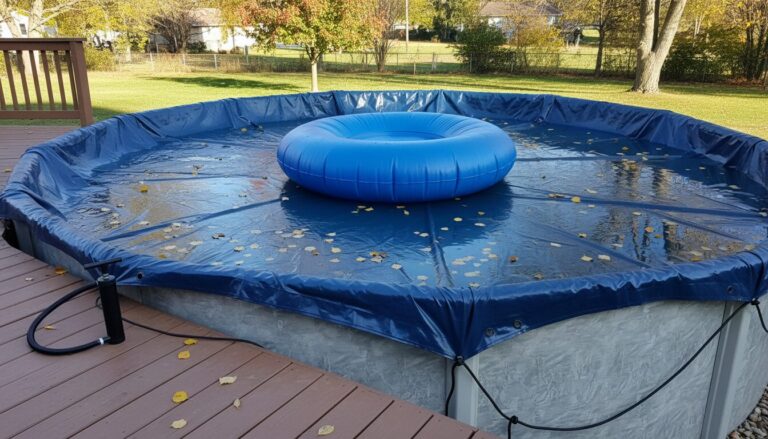
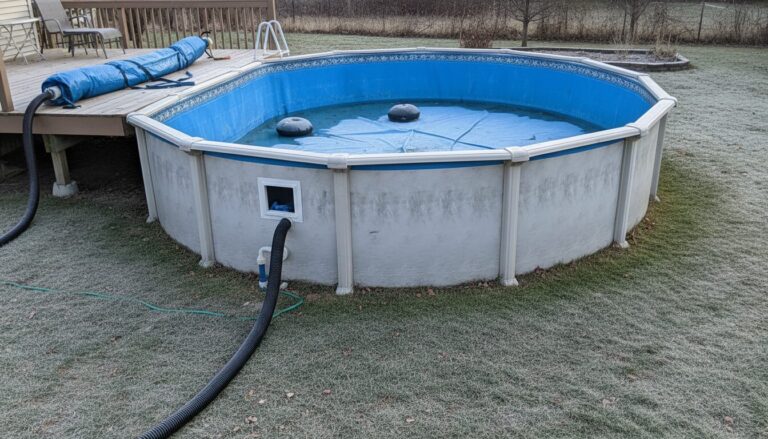
- Setting and forgetting in winter. Drop back to 4-6 hours per day in cold months when the pool is not being used, but never skip circulation entirely during a freeze event.
A Practical Starting Point for Different Pool Types
Here is a quick reference to work from, not a hard rule – use it until you have done your own turnover calculation:
- Above-ground pool, under 15,000 gallons: 6-8 hours per day
- In-ground pool, 15,000-25,000 gallons, single-speed pump: 8-10 hours per day
- In-ground pool, 25,000+ gallons: 10-12 hours per day
- Any pool with a variable-speed pump: 10-14 hours at low RPM (1,500-2,000), adjusted to achieve at least one full turnover
- During algae treatment or after shocking: Run continuously until water clears
One thing that helps confirm your pump is running effectively: consistent chemical readings between test days. If your chlorine is dropping erratically or your water tests differently in different parts of the pool, circulation is probably the culprit. AquaDoc makes a multi-test kit designed to let you check multiple points in your pool quickly, which is a practical way to spot circulation dead zones before they become real problems.
Frequently Asked Questions
How many hours a day should I run my pool pump?
Run your pump long enough to turn over your pool’s entire water volume at least once per day. For most residential pools, that works out to 8 hours, but smaller pools with efficient pumps may need only 6, while heavily used pools may need 10 or more.
Is it okay to run my pool pump 24 hours a day?
Running your pump continuously is not harmful to the pool, but it adds significant electricity cost without much added benefit beyond 12-14 hours in most cases. The exception is during an algae outbreak or after heavy chemical treatment, where extended run time genuinely helps.
What time of day should I run my pool pump?
Run your pump during off-peak electricity hours if your utility charges time-of-use rates, typically late night or early morning. If you use a chlorine feeder or salt cell, running the pump when the sun is highest ensures sanitizer is actively circulating during peak UV demand.
Can I run my pool pump less in the winter?
Yes. In colder months with low bather load and slower algae growth, 4-6 hours per day is usually enough to maintain circulation and chemical distribution. In freezing climates, run the pump continuously during freeze events to prevent pipe damage.
Does pump run time affect my chlorine levels?
Yes, directly. Poor circulation leaves dead spots where chlorine does not reach, allowing algae and bacteria to grow even when your test strip shows adequate sanitizer. Consistent daily run time is one of the most effective ways to keep chlorine working efficiently throughout the entire pool.