
A vinyl liner in an above-ground pool should last 10-15 years – but most people replace theirs in 7 or fewer. The difference almost always comes down to two things: water chemistry that runs out of range for weeks at a time, and a handful of avoidable physical habits. Get those two areas right and you can realistically double the life of your liner without spending anything extra. Here is exactly how to do it.
Why Do Above-Ground Pool Liners Fail Early?
Vinyl is tough, but it has two enemies: corrosive water and UV radiation. Low pH is the most destructive chemical problem – water below 7.0 becomes acidic enough to attack the vinyl itself, causing it to stretch, wrinkle, and eventually crack. If you have ever noticed your liner developing folds near the floor for no obvious reason, unbalanced water chemistry is almost always the root cause, as explained in more detail in this piece on why your vinyl liner wrinkles when your water is unbalanced.
High chlorine is the second chemical culprit. Sustained free chlorine above 5 ppm bleaches the liner’s printed pattern and stiffens the vinyl over time. Most liner damage from chlorine does not come from routine sanitizing – it comes from shock being added incorrectly (more on that below).
On the physical side, the main killers are: sharp objects (toys, jewelry, rough pool walls), dragging vacuum heads across the floor aggressively, and letting the pool sit partially drained. A liner that dries out even partway will shrink and lose elasticity. Once it loses that stretch, it is much more likely to crack on refill.
What Water Chemistry Numbers Actually Protect a Liner?
These are the targets that balance swimmer comfort with liner longevity. Post this on your pump shed.
- pH: 7.2 to 7.6. This is the single most important number for liner health. Below 7.2, the water starts attacking the vinyl. Above 7.8, chlorine loses effectiveness and scale can form.
- Total Alkalinity: 80 to 120 ppm. Alkalinity buffers pH from swinging wildly. If your pH bounces around every few days, low alkalinity is usually why.
- Free Chlorine: 1 to 3 ppm during normal use. Shock spikes will go higher temporarily – that is fine as long as it comes back down within 24 hours.
- Cyanuric Acid (CYA): 30 to 50 ppm. Stabilizer protects chlorine from UV, which means your chlorine stays effective at lower levels. Lower sustained chlorine is gentler on vinyl.
- Calcium Hardness: 175 to 275 ppm. This matters more for plaster pools, but in a vinyl pool, water that is too soft can leach minerals from fittings and gaskets, causing staining on the liner.
Test your water at least twice a week during swimming season. A $15 test kit is fine. The expensive part is the replacement liner, not the test strips.
How to Shock a Pool Without Damaging the Liner
Dumping granular shock directly onto your liner is one of the fastest ways to bleach and degrade it. The granules sink, sit on the vinyl, and create a concentrated burn spot. After a few seasons of this, you will have a faded, brittle patch where the granules always land.
The right way to shock an above-ground pool:
- Shock at dusk or nighttime – UV burns off unstabilized chlorine fast, and you get better results anyway.
- Pre-dissolve granular shock in a clean 5-gallon bucket of pool water before adding it to the pool. Stir until mostly dissolved.
- Pour the dissolved solution slowly around the perimeter of the pool while walking, not in one spot.
- Run the pump for at least an hour after shocking to distribute it evenly.
- Do not let anyone swim until chlorine drops back below 5 ppm.
Liquid chlorine (sodium hypochlorite) is gentler on liners than granular because it does not sink and concentrate. If your liner is already older or showing wear, consider switching to liquid for your weekly dose and reserving granular shock for true algae emergencies.
Physical Care Habits That Add Years to a Liner
Chemistry is the biggest factor, but daily handling matters more than most people realize.
Vacuum gently. Use slow, overlapping passes with a soft vinyl-safe vacuum head. Scrubbing aggressively or dragging the hose across the bottom creates friction wear over time, especially at seams.
Watch what goes in the water. Rough pool toys, metal buckles on life jackets, and jewelry are the most common sources of punctures and tears. A small tear caught early is patchable – a tear found after a week of water pressure pulling at it may not be.
Never drain your above-ground pool fully unless you absolutely have to. Even a partial drain exposes the upper liner to air and sun. If you do need to drain for repairs, move fast – the longer vinyl sits dry, the more it shrinks and stiffens. A liner that has been dry for more than a day or two may not re-seat correctly.
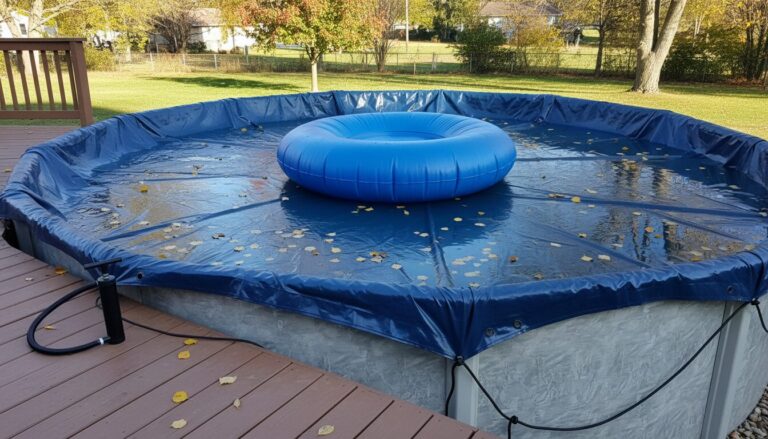
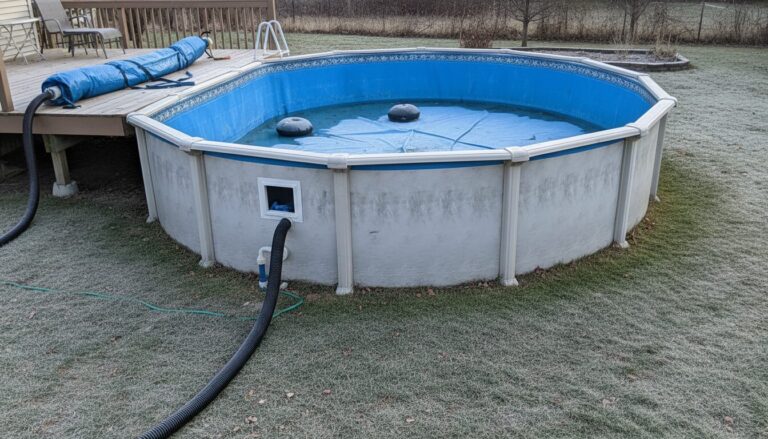
Close the pool properly at the end of the season. Add a winter closing chemical kit, lower water to just below the return fittings, and use a cover that fits properly. A cover that lets debris accumulate in the center creates dead weight that pulls the liner down and stretches it at the top rail.
How to Spot Problems Before They Get Expensive
Small issues caught early are almost always fixable. Ignored, they become liner replacements. Check your liner monthly for these warning signs:
- Wrinkles or folds on the floor or walls (usually a pH or water loss issue)
- Fading or bleaching in patches (high chlorine or direct shock contact)
- The liner pulling away from the top bead track (can signal shrinkage or a structural wall issue)
- Water loss beyond normal evaporation – more than a quarter inch per day suggests a leak
If you notice the liner pulling loose from the wall or shifting position, do not wait. That kind of movement tends to accelerate, as anyone who has dealt with a liner shifting early on can tell you. Underwater patch kits handle most small punctures while the pool is full – no draining required. Clean the area, cut a round patch with no sharp corners, and press it firmly. Patches last for years when applied correctly.
For chemical balance, AquaDoc makes a liner-safe alkalinity increaser and pH balancer that pool owners use specifically because it is formulated to dissolve fully before it contacts the liner – worth knowing if you are trying to avoid concentration burns from poorly-dissolving granular products.
What About UV and Fading?
UV degrades vinyl over time regardless of water chemistry – it is just physics. You cannot stop it entirely, but you can slow it down. A well-fitted pool cover used whenever the pool is not in use (even during the day in summer) dramatically reduces UV exposure on the upper liner. Some pool owners in high-sun climates also apply a vinyl protectant product once a season, similar to what you would use on a boat cover. Check that any product you use is labeled safe for swimming pool vinyl.
Above-ground pools that run in full sun all day in the Southwest or Southeast will see faster UV degradation than pools in shadier climates. That is not a reason to skip cover use – it is a reason to be more consistent about it.
Frequently Asked Questions
How long should an above-ground pool liner last?
A quality vinyl liner lasts 7-10 years under average care. With consistent water chemistry and proper physical maintenance, 12-15 years is achievable. Neglected chemistry and high UV exposure are the two fastest ways to shorten that lifespan.
What pH level damages a vinyl pool liner?
pH below 7.0 is the main chemical culprit – it makes pool water corrosive to vinyl, causing it to wrinkle, stretch, and eventually crack. Keep pH between 7.2 and 7.6 at all times to protect your liner.
Can high chlorine levels damage a pool liner?
Yes. Free chlorine above 5 ppm for extended periods bleaches and degrades vinyl. Shock your pool at dusk and never add undiluted granular shock directly onto the liner – always pre-dissolve it in a bucket of water first.
Does pool stabilizer (CYA) help protect a liner?
Stabilizer protects your chlorine from UV breakdown, which means chlorine stays effective at lower levels – and lower sustained chlorine is gentler on vinyl. Maintain CYA between 30-50 ppm for an outdoor above-ground pool.
How do you fix small holes in an above-ground pool liner?
Use an underwater vinyl patch kit while the pool is still full – draining stresses the liner and can make wrinkles permanent. Clean the area, cut a rounded patch with no corners, and press it firmly onto the liner. Most small punctures are fully patchable without draining.
The most expensive pool repair most above-ground owners ever face is a liner replacement. It is also one of the most avoidable. Keep your chemistry in range, shock correctly, handle the liner with a little respect, and cover it when it is not in use. That is genuinely all it takes to get 12 or more years out of something most people replace after 7.

[…] You can read more about how algae types differ and what each one requires in this overview of protecting your pool liner from chemical and biological […]