
Maintaining a pool costs most homeowners $1,200 to $3,600 per year doing it themselves, or $2,400 to $6,000+ with a professional weekly service. That works out to roughly $100 to $300 per month DIY, or $200 to $500 per month with a service. The spread is wide because pool size, equipment age, climate, and how consistent you are with chemistry all move the number significantly. Here is where the money actually goes, month by month and year by year.
Why Pool Costs Are Hard to Pin Down (And How to Think About Them)
Pool ownership costs fall into three buckets: recurring costs you pay every month, seasonal costs that hit once or twice a year, and repair costs that are unpredictable but inevitable. Most articles lump these together and give you a scary-looking annual number. It is more useful to understand each bucket separately so you can see where you actually have control.
Pool size matters more than most people expect. A 15,000-gallon pool uses noticeably more chlorine and shock than a 30,000-gallon pool – not twice as much, but the chemistry costs scale up meaningfully. If you do not know your pool’s volume, calculate it before you start budgeting. Length x width x average depth x 7.5 gives you gallons for a rectangular pool.
What Are the Monthly Pool Costs?
Chemicals: $30 to $100 per month. This is the most variable line item and the one you have the most control over. Chlorine tablets run about $50 to $80 for a 25-lb bucket that lasts most pools two to three months in the off-season, and closer to one month in peak summer. Add shock, algaecide when needed, pH adjusters, and cyanuric acid top-offs, and a reasonable monthly average for a 20,000-gallon pool is $50 to $80 in-season. Keeping your chemistry balanced – especially pH in the 7.4 to 7.6 range and free chlorine at 2 to 4 ppm – means you spend less fixing problems than preventing them. AquaDoc makes a weekly maintenance pack that some pool owners use to simplify this routine without overcomplicating the lineup.
Electricity: $50 to $150 per month. Your pump is the main draw. A single-speed 1.5 HP pump running 8 hours a day at the national average electricity rate costs roughly $50 to $70 per month. A variable-speed pump running the same total turnover often cuts that in half. If you have a heater, add $50 to $200 per month depending on fuel type and how warm you keep the water. Running your pump during off-peak hours and using a timer can trim $15 to $30 off the monthly bill without any other changes.
Water: $5 to $20 per month. Evaporation, backwashing the filter, and splash-out all mean you are topping off regularly. Most pools lose 1 to 2 inches of water per week in summer. At typical residential water rates this is a minor cost, but it is real, and a slow leak can quietly double it. If your water bill jumps, it is worth reading the difference between evaporation and a real leak before you assume it is just summer heat.
What Are the Annual and Seasonal Pool Costs?
Opening and closing: $150 to $500 per year. In climates where you winterize, opening and closing the pool are real cost events. DIY closing costs $50 to $150 in chemicals and supplies. A service company charges $150 to $300 for closing, and similar for opening. If you do both yourself you save $200 to $400 per year, but you need the right equipment and a checklist worth following.
Filter maintenance: $50 to $200 per year. Sand filters need fresh sand every 5 to 7 years (roughly $100 to $200 to replace). Cartridge filters need new cartridges every 1 to 2 years depending on size and load, typically $50 to $150. DE filters need diatomaceous earth added after each backwash, which adds up to $30 to $80 per year in materials. All three filter types need regular cleaning; skipping this is one of the most common ways people end up with expensive water clarity problems mid-season.
Equipment: $200 to $600 per year on average, with big spikes. Most pool equipment lasts 7 to 15 years with proper care. A pump motor replacement runs $200 to $500. A new pump entirely is $400 to $1,200. A filter tank is $300 to $800. A heater can be $1,500 to $3,000. None of these happen every year, but they happen. Budget $200 to $400 annually as a reserve, and when something fails in year 10, you will not feel blindsided.
DIY vs. Pool Service: The Real Cost Difference
A professional weekly pool service in most parts of the country runs $100 to $250 per month for basic chemical maintenance and a brush-and-skim visit. Full-service contracts that include equipment monitoring and minor repairs run $200 to $400 per month. That is real money – $1,200 to $4,800 per year just for labor that you could do yourself in 20 to 30 minutes per week once you know the routine. Most pool owners who commit to learning their water chemistry find it clicks within one full season, and the savings compound quickly. For a good primer on pool service industry norms and what you are actually paying for, Pool Troopers’ blog is a solid industry perspective worth browsing.
That said, there is a real argument for professional service if your schedule is unpredictable, if your pool is large and complex, or if you are new to pool ownership and do not want chemistry problems to ruin your first summer. Just know what you are paying for and audit the service occasionally – not every weekly visit includes everything on the invoice.
The Hidden Cost Most Pool Owners Underestimate
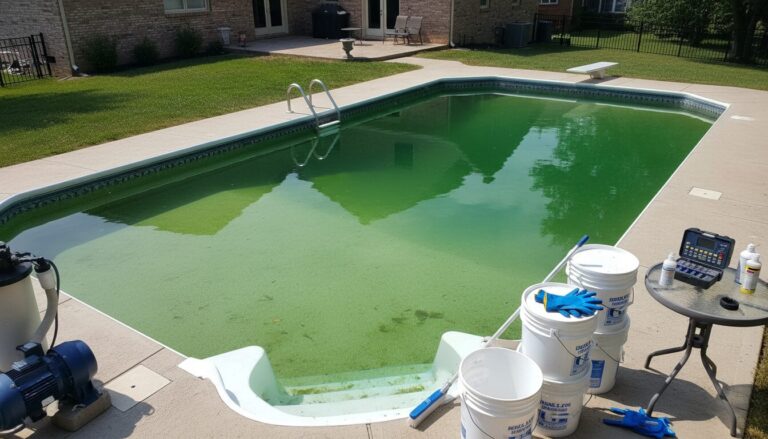
The most expensive pool maintenance mistake is not the big equipment failure – it is the cascade of small chemistry neglect. Letting pH drift above 7.8 for two weeks makes your chlorine work at a fraction of its effectiveness, which lets algae get a foothold, which costs you $80 in shock and algaecide and a weekend of your time to clear. Staying on top of chemistry with a 10-minute weekly test is the single highest-return habit in pool ownership. A basic liquid test kit or a decent set of test strips runs $15 to $30 and pays for itself the first time it catches a pH problem before it turns into something worse.
What a Realistic Annual Pool Budget Looks Like
- Chemicals (in-season, DIY): $400 to $800
- Electricity (pump + heater if applicable): $600 to $1,800
- Water: $60 to $200
- Opening and closing: $100 to $500
- Filter maintenance: $50 to $200
- Repair reserve: $200 to $400
- Total DIY estimate: $1,400 to $3,900 per year
- Total with weekly service added: $2,600 to $6,900 per year
The gap between the low and high end of those ranges is almost entirely explained by equipment age, pool size, and how proactive you are. A newer variable-speed pump, a 15,000-gallon pool in a mild climate, and consistent weekly chemistry puts you near the bottom. An aging single-speed pump, a heated 35,000-gallon pool in a hot humid climate, and occasional neglect puts you near the top.
Frequently Asked Questions
How much does it cost to maintain a pool per month?
DIY pool maintenance typically runs $100 to $300 per month, covering chemicals, electricity, and minor supplies. Hiring a weekly pool service brings that to $200 to $500 per month depending on your area and what the service includes.
What is the biggest ongoing cost of owning a pool?
Electricity for the pump is usually the single largest recurring cost, often $50 to $150 per month depending on your pump type, run time, and local utility rates. Chemicals are the second biggest line item, and the one you have the most direct control over through good habits.
How much should I budget for pool repairs each year?
Budget $200 to $400 per year as a repair reserve for minor items like gaskets, valves, and O-rings. Major equipment failures – pump motor, filter tank, heater – run $500 to $2,500 each but typically happen once every several years rather than annually.
Is it cheaper to do pool maintenance yourself?
Yes, noticeably cheaper. DIY pool care typically saves $100 to $250 per month compared to a full-service contract. Most pool owners learn the basics within one season, and the time investment is 20 to 30 minutes per week once you have a routine.
How can I lower my pool maintenance costs?
Run your pump on a timer during off-peak electricity hours, test your water weekly so small chemistry problems do not become expensive ones, and keep your filter clean so your pump works efficiently. These three habits alone can save $300 to $600 per year compared to reactive maintenance.
The bottom line: pool ownership is not cheap, but it is predictable if you budget honestly and stay consistent. The owners who spend the most are usually the ones who ignore small problems until they become big ones – not the ones with large pools or complex equipment. A weekly 20-minute routine and a basic test kit are genuinely the best investments you can make in keeping costs manageable year after year.