
Keeping an above-ground pool clean doesn’t have to eat your weekends. With the right routine, most above-ground pools need about 15 to 20 minutes of actual hands-on work per week. The secret is doing small tasks on a consistent schedule rather than letting things slide until you have a real problem. Here’s a realistic, specific routine that keeps your water clear all season without turning into a part-time job.
Why Above-Ground Pools Get Dirty Faster Than You Think
Above-ground pools have less water volume than inground pools, which means chemistry swings happen faster. A rainstorm, a heavy swim session, or a few hot days can shift your chlorine and pH noticeably. Smaller water volume also means debris, oils, and contaminants get more concentrated more quickly. Add in the fact that many above-ground pool setups run smaller pumps and filters, and you have a system that needs more frequent attention per gallon, not less.
The good news: smaller volume is also easier to correct. You don’t need a pound of chemicals to fix things. You just need to catch problems early, which is exactly what a consistent routine does.
What Does a Weekly Above-Ground Pool Maintenance Routine Actually Look Like?
A solid weekly routine has three layers: quick daily or every-other-day checks, a midweek chemistry test, and a single longer session once a week for brushing and vacuuming. Spread across the week, none of these take long on their own.
Every 2 to 3 days (about 5 minutes):
- Empty the skimmer basket
- Skim the surface for leaves and debris
- Glance at the pump to confirm it’s running
Twice a week (about 5 minutes):
- Test chlorine and pH with a test strip or liquid kit
- Adjust pH if it’s outside the 7.2 to 7.6 range
- Add chlorine if the level is below 1 ppm
Once a week (about 15 minutes):
- Brush the pool walls and floor toward the drain
- Vacuum or run your automatic cleaner
- Check alkalinity (target 80 to 120 ppm) and adjust if needed
- Shock the pool in the evening if you’ve had heavy use, rain, or murky water
How Do You Keep Chemistry Balanced Without Constant Testing?
Consistent chlorine delivery is the biggest time-saver in pool care. Instead of adding liquid chlorine by hand every day, use a floating dispenser or an inline feeder loaded with 3-inch stabilized chlorine tablets. This keeps your chlorine level steady between your twice-weekly checks. Target 1 to 3 ppm free chlorine. If you’re dropping below 1 ppm regularly, adjust how many tablets are in the dispenser rather than chasing it with manual additions.
pH drifts are the second most common maintenance headache. Most pool water drifts up toward 7.8 or higher over time. When pH is too high, chlorine becomes less effective and you end up using more of it. A quick pH test and a small dose of pH decreaser (dry acid or muriatic acid) takes 3 minutes and saves hours of trouble later. River Pools and Spas has a solid explanation of how pH affects chlorine efficiency if you want the chemistry background.
Cyanuric acid (CYA) protects chlorine from UV breakdown in outdoor pools. Target 30 to 50 ppm. Without it, sunlight destroys your chlorine within hours. If you’re already using stabilized tablets, CYA is already being added slowly – just check your level at the start of the season and after big dilutions like rain or splashing.
What’s the Fastest Way to Keep Debris Out in the First Place?
The less debris that gets into the water, the less work you do. A few simple habits cut your cleaning time significantly:
- Use a pool cover whenever the pool isn’t in use. A basic solar cover (also called a bubble cover) keeps out leaves, slows evaporation, and warms the water. It takes 60 seconds to pull on or off.
- Trim overhanging trees or shrubs near the pool. Less leaf drop means far fewer skimming sessions.
- Ask swimmers to rinse off before getting in. Sunscreen, body oils, and dirt are the biggest contributors to cloudy water and chlorine demand. This is an underrated step that most pool owners skip.
- Keep a small brush near the pool and give the walls a 2-minute scrub whenever you’re out there anyway. Algae starts as a film on walls before it turns your water green – brushing breaks it loose so the filter can catch it.
Should You Use an Automatic Cleaner for an Above-Ground Pool?
Yes, and it’s probably the single best investment for cutting maintenance time. A basic suction-side cleaner attaches to your skimmer, runs off your existing pump, and crawls the floor of the pool while you do other things. You don’t need a robot cleaner with above-ground pools (though they work great). A good suction cleaner costs $60 to $150 and eliminates most of your vacuuming. Run it 2 to 3 times a week for an hour or so. For more on how the different cleaner types compare, the CarefreePoolClub post on pool robots vs suction cleaners vs manual vacuums is worth a read before you buy.
One Thing Most People Forget: The Filter
Your filter does the heavy lifting for water clarity, and if you neglect it, no amount of chemicals will keep the water clear. For cartridge filters, rinse the cartridge with a garden hose every 2 to 4 weeks during swimming season. For sand filters, backwash when the pressure gauge reads 8 to 10 psi above its clean baseline – typically every 1 to 2 weeks in summer. A dirty filter doesn’t just mean cloudy water; it makes your pump work harder and shortens its life.
Also make sure your pump runs long enough. For above-ground pools, 8 hours of daily circulation is the minimum. A simple $15 outlet timer takes the guesswork out entirely. AquaDoc makes a weekly pool maintenance kit that combines the most-needed chemicals into a single shipment, which is a practical way to avoid the “I ran out of pH down” problem that derails a lot of routines.
Frequently Asked Questions
How often should I clean my above-ground pool?
Skim the surface and check the skimmer basket every 2 to 3 days. Test water chemistry twice a week during summer. A full brush-and-vacuum session once a week is enough for most above-ground pools.
How long should I run my above-ground pool pump each day?
Run your pump at least 8 hours per day during summer. A timer set to run during daylight hours keeps chlorine active and prevents stagnation without you having to think about it.
What chemicals do I need to maintain an above-ground pool?
The basics are chlorine (tablets or liquid), pH increaser and decreaser, alkalinity increaser, and a weekly shock. Cyanuric acid (stabilizer) is also essential for outdoor pools to protect chlorine from UV breakdown.
Why does my above-ground pool get cloudy so fast?
Cloudy water is almost always a chemistry problem: low chlorine, unbalanced pH, or high alkalinity. Test your water first before adding anything. Most cloudiness clears within 24 hours once chlorine and pH are corrected.
Can I leave my above-ground pool without chemicals for a week?
Not safely. Without chlorine, algae can take hold in 24 to 48 hours in warm weather. If you’re away for a week, dose the pool with a slow-release stabilized chlorine source and consider a shock treatment before you leave.
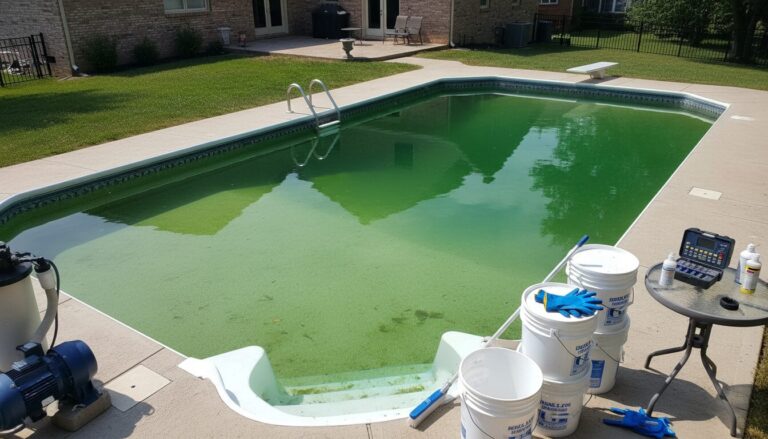
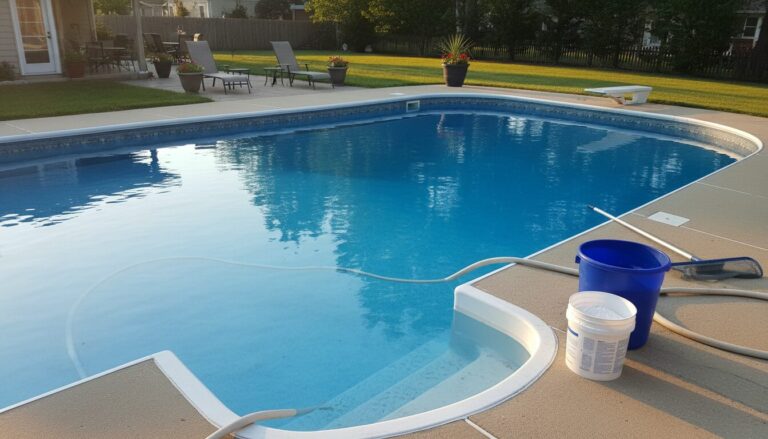
The biggest shift most above-ground pool owners make is stopping reactive maintenance and starting proactive maintenance. Once you spend 20 minutes on a Tuesday doing a few small things, you never have to spend a whole Saturday fighting green water. That’s the real payoff.

[…] a deeper look at the full above-ground pool maintenance picture, the weekly above-ground pool maintenance breakdown on this site walks through each task in more detail, including seasonal adjustments for spring […]