
You look out at your pool and the water looks like pea soup – or worse, like someone poured a cup of pond into it. You already know you need to shock it, but you have no idea whether you need two bags of cal-hypo or ten, and adding too little just means you repeat the whole thing in three days.
For a 20,000-gallon inground pool, plan on using 4 to 6 pounds of 68% cal-hypo shock for light-green water, 6 to 9 pounds for medium-green, and 9 to 12 pounds (sometimes more) for dark green or near-black water, applied over consecutive nights until the algae is gone. This article walks through exactly how to size the dose, why algae color matters so much, what order to do things in, and the most common mistakes that turn a 3-day fix into a 2-week project.
Why Algae Color Determines Your Dose
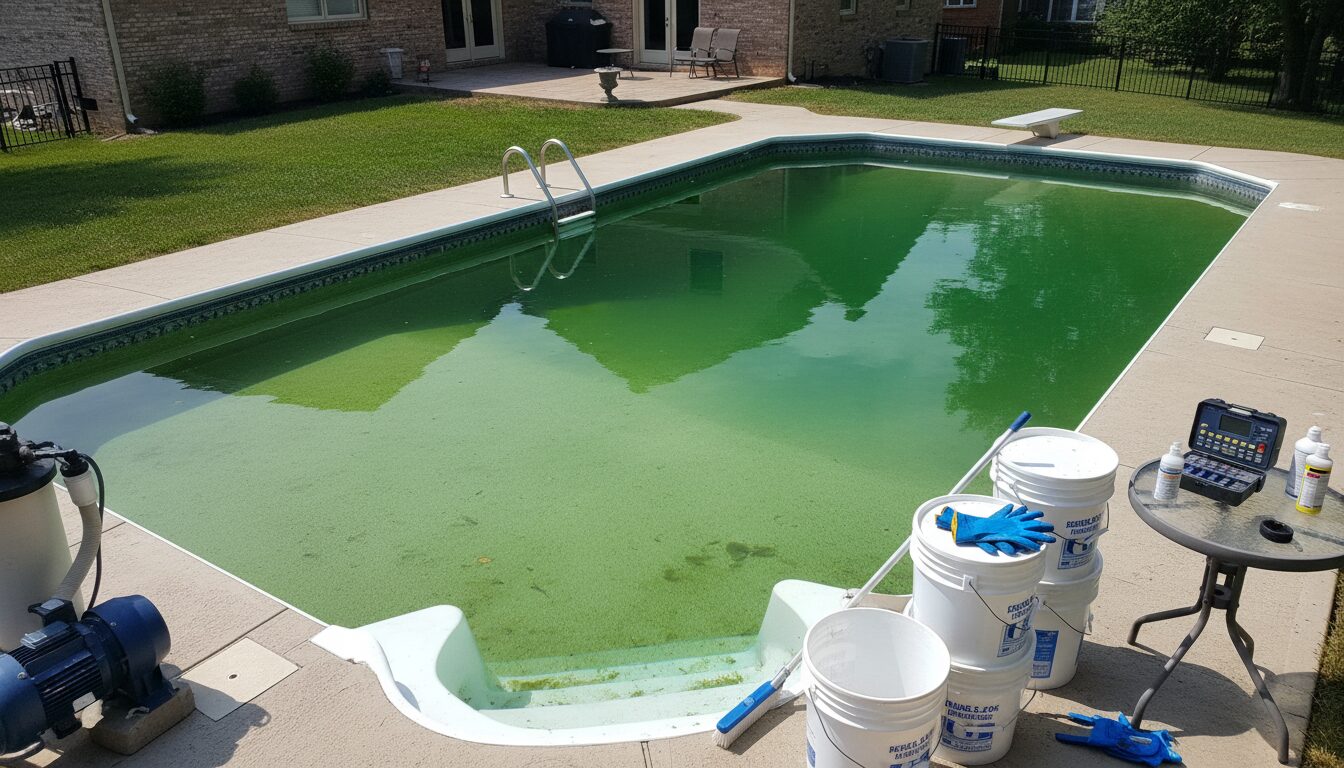
The shade of green in your pool isn’t just cosmetic – it tells you how heavy the algae load is and, more importantly, how much chlorine demand you’re dealing with. A pool that’s barely tinted green has a thin biofilm just getting started. A pool that looks dark green or has patches turning gray or black has established algae colonies with protective slime layers that take a much higher chlorine concentration to penetrate. The rule of thumb pros use is simple: light green means shock at roughly 30 ppm free chlorine; medium green targets 40 ppm; dark green or black targets 60 ppm or higher.
For a 20,000-gallon pool, raising free chlorine by 10 ppm requires approximately 1.7 pounds of 68% cal-hypo shock. Work backward from there and the doses write themselves:
| Water Color | Target FC (ppm) | Approx. Pounds of 68% Cal-Hypo | Number of Nights |
|---|---|---|---|
| Light green (tinted, visible bottom) | 30 ppm | 4 to 6 lbs | 1 to 2 |
| Medium green (murky, bottom barely visible) | 40 ppm | 6 to 9 lbs | 2 to 3 |
| Dark green / gray-green (bottom invisible) | 60+ ppm | 9 to 12+ lbs | 3 to 5 |
Why These Numbers Matter for Your Decision
The “nights” column matters as much as the pound count. Chlorine is consumed rapidly when algae is present, so shocking once and waiting a week is almost always a waste of product. Each morning you should test free chlorine with a reliable kit: if it drops below 1 ppm overnight, the algae is still consuming it and another dose is due that evening. If it holds above 1 ppm after a full night, you’re making real progress. The goal is a reading above 1 ppm by morning on two consecutive nights, then a visible clearing of the water to a milky blue or gray haze before it finally polishes out to clear.
Step-by-Step: How to Actually Clear the Pool
- Test and balance pH first. Shock works best between pH 7.2 and 7.4. At pH 7.8, roughly 80% of your chlorine converts to hypochlorite ion and becomes far less aggressive against algae. Spend the acid before you spend the shock. If you need a refresher on using muriatic acid before shocking, the article on understanding what pool gallons mean for chemical dosing explains why volume and balance always come first.
- Brush every surface. Algae clings to walls, steps, and corners with a protective slime layer. Brushing breaks that layer and exposes the cells to chlorine. Skip brushing and you’ll use 30 to 50% more shock to get the same result. Do it before shocking and again the next morning. Brushing is so critical that a pool that keeps going green despite regular shocking is almost always a brushing problem – see Green Algae Again Because You Skipped Brushing Your Pool for why this step is so commonly skipped.
- Pre-dissolve cal-hypo in a bucket. Never add granular shock directly to the pool water, especially over a vinyl liner. Add the shock to a 5-gallon bucket of pool water, stir until mostly dissolved, then pour slowly around the perimeter.
- Shock at dusk. Sunlight degrades chlorine rapidly. A shock dose added at noon can lose 50% of its potency before evening. Add your full dose after the sun goes down so it has all night to work.
- Run the filter continuously. Keep the pump running 24 hours a day until the pool is clear. Backwash or clean the filter every 6 to 8 hours during active algae treatment – a clogged filter stops pulling dead algae out of the water and stalls the whole process.
- Test the next morning. If free chlorine is below 1 ppm, repeat the full dose that evening. If it’s holding above 1 ppm, re-dose at half the original amount to keep pressure on the remaining algae.
- Add an algaecide only after the water clears. Adding algaecide into high-chlorine water just destroys the algaecide and wastes money. Use it as a maintenance dose once the pool is clear to prevent a comeback.
A Worked Example: Dark Green 20,000-Gallon Pool
Say your pool is 20,000 gallons and the bottom has been invisible for two weeks. That’s a dark-green situation. Your starting free chlorine reads 0 ppm. You need to reach roughly 60 ppm to break through established algae colonies. At 1.7 pounds of 68% cal-hypo per 10 ppm of lift in 20,000 gallons, hitting 60 ppm means you need about 10 pounds on night one. You brush the pool before adding anything, balance pH to 7.2, dissolve the shock in buckets, and pour it in after 8 p.m. with the pump running. The next morning free chlorine reads 0.5 ppm – the algae consumed almost all of it overnight. That tells you the battle is on: you dose again that evening with another 6 to 8 pounds. By morning two you read 2 ppm and the water has shifted from dark green to a murky gray-green. You add another 4 pounds that night. By morning three you read 3 ppm and the water is turning milky blue. At that point you’re winning.
Total product used: roughly 18 to 22 pounds over three nights, plus ongoing filtration. That’s not unusual for a seriously neglected dark-green pool, and it’s far cheaper than draining and refilling or calling a service company for an emergency visit. AquaDoc’s cal-hypo pool shock is one product pool owners use for this kind of heavy treatment because it’s 68% available chlorine with no binders or fillers that cloud the water further – but whatever granular cal-hypo you use, the dose math above stays the same.
Common Mistakes That Extend the Process
- Under-dosing on night one: Using 2 to 3 pounds when you need 10 just depletes your budget and gives the algae more time to recover. Commit to the full dose from the start.
- Adding shock during the day: UV degrades chlorine fast. A pound of shock at noon may be a fraction of a pound by evening. Always shock after sunset.
- Skipping pH adjustment: At pH 7.8 or above, chlorine efficacy drops sharply. You can burn through twice the product and still not clear the pool if pH is high.
- Not backwashing the filter: Dead algae is fine particulate matter that clogs filter media quickly. A filter running at high pressure isn’t turning water over efficiently. Backwash often.
- Adding algaecide too early: High chlorine levels destroy most algaecide formulas instantly. Add algaecide as a maintenance product after the water is clear, not as part of the initial treatment.
- Stopping too soon: The pool turns a milky blue and it looks like it’s fixed. Many owners stop shocking at this point, but that milky color is dead algae in suspension, not a clear pool. Keep filtering and test again before declaring victory.
What If You’re Using Liquid Chlorine Instead?
Liquid chlorine (10% sodium hypochlorite) is a solid alternative if you prefer not to handle granular product. One pound of 68% cal-hypo delivers roughly the same available chlorine as about one gallon of 10% liquid chlorine. So for a dark-green 20,000-gallon pool, you’d be looking at 9 to 12 gallons of liquid chlorine on night one. That’s a lot of jugs to haul around, which is why most pool owners dealing with a serious bloom prefer granular for the initial heavy treatment and switch to liquid for top-offs. Either way, the dose-by-color logic in the table above still applies.
Frequently Asked Questions
How many pounds of shock does it take to clear a green 20,000-gallon pool?
A lightly green 20,000-gallon pool needs roughly 4 to 6 pounds of 68% cal-hypo shock. Medium-green water calls for 6 to 9 pounds, and a dark green or black pool may need 9 to 12 pounds or more applied over two to three nights. Always re-test the next morning and re-dose if free chlorine drops below 1 ppm.
Can I use liquid chlorine instead of cal-hypo shock to clear a green pool?
Yes. One pound of 68% cal-hypo shock delivers roughly the same available chlorine as one gallon of 10% liquid chlorine. For a dark-green 20,000-gallon pool you would need roughly 9 to 12 gallons of liquid chlorine as a starting dose, re-applied each night until the water clears. Granular cal-hypo is typically easier to handle in those quantities.
How long does it take to clear a green 20,000-gallon pool after shocking?
Light algae blooms typically clear in 24 to 48 hours after a proper shock dose. Heavy or dark-green pools can take 3 to 5 days of repeated nightly shocking, daily brushing, and continuous filtration before the water turns blue. Running your filter 24 hours a day and backwashing every 6 to 8 hours speeds this up significantly.
Should I lower pH before shocking a green pool?
Yes, always balance pH first. Shock is most effective at a pH of 7.2 to 7.4. At pH 7.8 or above, a large portion of your chlorine becomes far less effective at killing algae. Lower pH before adding shock so every pound of product works at full strength.
How much shock does a dark green or black 20,000-gallon pool need?
A black or near-black 20,000-gallon pool typically requires around 9 to 12 pounds of 68% cal-hypo shock on the first night, with follow-up doses of 4 to 6 pounds on subsequent nights until the water holds a free chlorine reading above 1 ppm by morning. The total product used over the full treatment often runs 18 to 25 pounds before the pool is fully clear.
The bottom line: for a green 20,000-gallon inground pool, dose by what you see – 4 to 6 pounds for light green, up to 10 to 12 pounds for dark green – always after sunset, always with the filter running, and always with a morning test before you decide whether last night did the job.