
If your pool heater isn’t working, start with these four things before calling anyone: check that the pump is running and flow is strong, confirm the filter is clean, look for a tripped breaker or error code on the heater display, and verify your water chemistry – especially pH. The majority of pool heater failures are caused by one of those four things, and most of them you can fix in under an hour without a service call.
Why Checking Flow First Saves You Time and Money
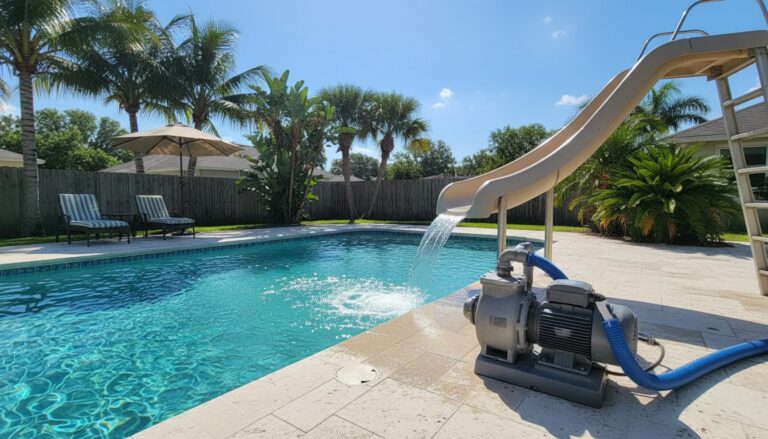
Pool heaters have a pressure switch that prevents the unit from firing if water flow is too low. It’s a safety feature, but it’s also the single most common reason a heater won’t ignite. If your pump is running slower than usual, your filter is overdue for a cleaning, or a valve somewhere got bumped closed, the heater will sit there looking fine but refusing to start. Before you touch anything on the heater itself, walk to your equipment pad and confirm the pump is actually running at full speed, not just humming at a reduced RPM in economy mode.
A clogged filter is the most common flow killer. If your filter pressure gauge reads 8-10 PSI above its clean baseline, clean the filter before you do anything else. For sand filters, that means a backwash. For cartridge filters, pull the element and rinse it down. Once flow is restored, try the heater again. You’d be surprised how often that’s the whole story.
How to Read Your Heater’s Error Codes
Modern pool heaters – both gas and heat pump – display error or fault codes when something trips a safety switch. The most common codes involve low pressure (LO or PS), high temperature (HI or HLS), and ignition failure (IF or similar). Pull up your heater’s manual and look up the specific code you’re seeing. If you’ve misplaced the manual, the brand and model number on the unit’s data plate will get you a PDF in about 30 seconds online.
A high-limit switch code (HLS or similar) means the water coming out of the heater got too hot – often because flow dropped during operation. An ignition failure code on a gas heater usually points to the igniter, the flame sensor, or gas supply. A service or fault code with no other symptoms can sometimes clear by simply turning the heater off, waiting 60 seconds, and restarting it. If the same code comes back immediately, it needs a real fix.
What to Check on a Gas Pool Heater That Won’t Ignite
Gas heater ignition failures follow a pretty predictable list. Work through these in order:
- Confirm gas supply. Check that the gas valve at the heater is open and, if it’s a propane system, that the tank has fuel. If other gas appliances in your home are also acting up, the issue is with your supply line, not the heater.
- Check the igniter. Most modern heaters use a hot surface igniter or an electronic ignition. If you can see the igniter during a startup attempt (some heaters let you watch through a small window), it should glow orange-hot or spark visibly. No glow or spark means the igniter has likely failed.
- Inspect the flame sensor. A dirty flame sensor is one of the most common gas heater problems that DIYers can fix. The sensor is a small metal rod positioned in the burner flame. Carbon buildup on the sensor prevents it from detecting the flame, so the heater shuts off as a safety measure. Light sanding with fine steel wool cleans it in minutes.
- Look at the venting. A blocked flue or exhaust vent will trigger a safety shutoff. Check for debris, bird nests, or anything obstructing the vent termination outside.
If a storm recently knocked out power or caused a surge, it’s worth knowing that heaters can develop ignition and control board issues after electrical events even when the rest of your equipment looks fine.
How Bad Water Chemistry Can Kill a Pool Heater
This one catches a lot of pool owners off guard. Low pH – anything below 7.2 – turns your pool water corrosive, and that corrosive water runs directly through the heater’s copper heat exchanger. Over time it eats tiny pinholes through the copper, causing leaks inside the heater and eventually total heat exchanger failure. High calcium hardness (above 400 ppm) causes the opposite problem: scale builds up on the inside of the heat exchanger, acting like insulation and choking off flow.
Keep your pH between 7.4 and 7.6, your total alkalinity between 80 and 120 ppm, and your calcium hardness between 200 and 400 ppm. These aren’t just general pool chemistry targets – they’re specifically what heater manufacturers require to keep warranties valid. AquaDoc makes a calcium hardness increaser that pool owners use to bring low calcium up gradually without overshooting, which matters because swinging calcium too high too fast just trades one problem for another.
If you’ve been running low pH for a while and your heater is showing reduced output or leaking, the heat exchanger may already be damaged. That repair typically costs $300-$600 in parts alone, plus labor – which is a strong argument for keeping your chemistry dialed in year-round.
Heat Pump-Specific Issues Worth Knowing
Heat pumps work differently from gas heaters and have a few failure modes that are unique to them. The most important one: heat pumps require ambient air temperatures above about 50 degrees Fahrenheit to operate efficiently. Below that threshold, most units will lock out automatically. If you’re trying to heat the pool in cooler weather and nothing happens, that may simply be the unit doing exactly what it was designed to do.
Heat pumps also rely on airflow across an evaporator coil. If leaves, debris, or overgrown landscaping are blocking the unit, efficiency drops and the compressor can overheat. Keep at least two feet of clear space around all sides of the unit. A frozen evaporator coil (looks like frost or ice on the outside of the unit) usually means low refrigerant, which requires a certified HVAC or pool equipment tech to service.
When to Stop Troubleshooting and Call a Tech
There’s a clear line between owner troubleshooting and professional repair territory. You can and should handle: cleaning the filter, checking gas valves, clearing error codes, cleaning a flame sensor, and correcting water chemistry. You should call a licensed technician for: anything involving the gas line connections themselves, the heat exchanger, internal wiring, control board replacement, or refrigerant (on heat pumps). Gas work in particular is not a DIY task unless you’re actually licensed to do it.
A good service call on a pool heater typically runs $150-$300 for diagnosis and minor repairs. If a tech quotes you more than the cost of a replacement heater for a repair, get a second opinion. Entry-level gas heaters start around $800-$1,200, and sometimes replacement makes more economic sense than a major repair on an older unit.
Frequently Asked Questions
Why does my pool heater turn on but not heat the water?
If the heater fires but water temperature doesn’t rise, the most common causes are low water flow, an undersized heater running against heat loss, or a partially blocked heat exchanger. Check that your pump is running at full speed and your filter is clean before anything else.
Why does my pool heater keep shutting off?
Repeated shutoffs usually mean a safety switch is tripping. The most common culprits are low water flow (triggering the pressure switch), high water temperature (hitting the high-limit switch), or a dirty flame sensor. Each of these has a specific fix once you identify which switch is activating.
Can bad pool chemistry stop a heater from working?
Yes. Low pH (below 7.2) creates corrosive water that damages copper heat exchangers and can trigger a fault code. High calcium causes scale buildup inside the heat exchanger, restricting flow and reducing efficiency. Keep pH between 7.4 and 7.6 and calcium hardness between 200 and 400 ppm.
How do I know if my pool heater pressure switch is bad?
A faulty or tripped pressure switch usually shows as an error code on the heater display or causes the heater to attempt ignition and immediately shut off. First rule out actual low-flow conditions by cleaning the filter and checking pump operation, then test or replace the switch if flow is confirmed to be adequate.
Should I call a technician or can I fix my pool heater myself?
Anything involving gas connections, internal wiring, or heat exchanger replacement should go to a licensed technician. Flow issues, dirty filters, tripped breakers, and chemistry corrections are all owner-serviceable and should be your first troubleshooting steps before scheduling a service call. For a broader look at professional pool equipment service, pool service companies can also walk you through what a repair will realistically involve before you commit.