
If you’ve ever knelt on a concrete deck with an anchor tool in one hand and a sore wrist from the other, you know how fast a simple step in pool closing can turn into a frustrating half-hour project. Safety cover anchors are small, but when they corrode or seize up, they can hold your entire winterizing process hostage.
The short answer: you remove a safety cover anchor from concrete by using a dedicated anchor removal tool to thread into the anchor body and pull it free, then cap or store the hardware before closing. That process works smoothly most of the time – but corroded anchors, stripped threads, and cracked housing are all real complications that need specific fixes. This guide walks through the full removal process, what to do when an anchor won’t come out, how to handle damaged anchors, and how to store everything so next spring’s reinstall is painless.
What Type of Anchor Are You Working With?
Before you grab any tools, identify the anchor style in your deck. Most inground pool safety covers use one of two systems:
- Pop-up brass anchors: These sit flush with the deck when not in use and are lifted by inserting a special key or the cover’s brass hook. The anchor body is threaded into a plastic or brass sleeve set in the concrete. This is the most common residential type.
- Deck anchors with removable hardware: Some systems use a bolt or pin mechanism rather than a pop-up design. The anchor housing stays in the concrete permanently, and a removable bolt or cap is threaded in or out each season.
Knowing which system you have determines which tool you need and whether “removal” means pulling the whole anchor out of the concrete or simply turning the active hardware down flush. For the vast majority of homeowners, you’re working with brass pop-up anchors set into concrete or paver decks, and the steps below apply directly.
Tools and Supplies You Need
- Anchor removal tool (or brass anchor removal kit): A purpose-built tool that threads into the anchor and gives you leverage to pull it free. These run $15-$30 and are worth every dollar compared to improvising. EZ Pool and Spa Supply’s guide on brass anchor removal kits is a useful reference for understanding which kit fits your anchor brand.
- Penetrating oil: WD-40 or a dedicated rust penetrant for seized anchors.
- Needle-nose pliers: For gripping partially raised anchor bodies.
- Lithium grease or silicone lubricant: For coating threads before reinstallation.
- Replacement anchors and caps: Keep a few on hand. They cost $5-$15 each and you’ll likely find at least one that’s past saving.
- 1/2-inch masonry bit and hammer drill: Only needed if you’re replacing a completely seized or broken anchor housing.
Step-by-Step: How to Remove Safety Cover Anchors from Concrete
Step 1: Remove the Safety Cover First
Detach the cover straps from the anchors and fold or roll the cover off the pool before doing any anchor work. You want clear access to every anchor point, and trying to work around a cover increases the chance of dropping tools into the water. Once the cover is off, brush it clean and let it dry before folding. Properly removing and storing your safety cover also extends its life significantly – a clean, dry cover stored in a bag or on a reel will last 10-15 years; one folded damp rarely makes it past 7.
Step 2: Walk the Deck and Assess Every Anchor
Before you start pulling, do one lap around the pool and look at each anchor. Note which ones sit proud of the deck surface (they should be flush or recessed), which ones show green or white corrosion, and which ones have visibly cracked surrounding concrete. Corroded ones get penetrating oil now, at the start, so it has time to work while you’re pulling the easy anchors first.
Step 3: Use the Removal Tool on Standard Anchors
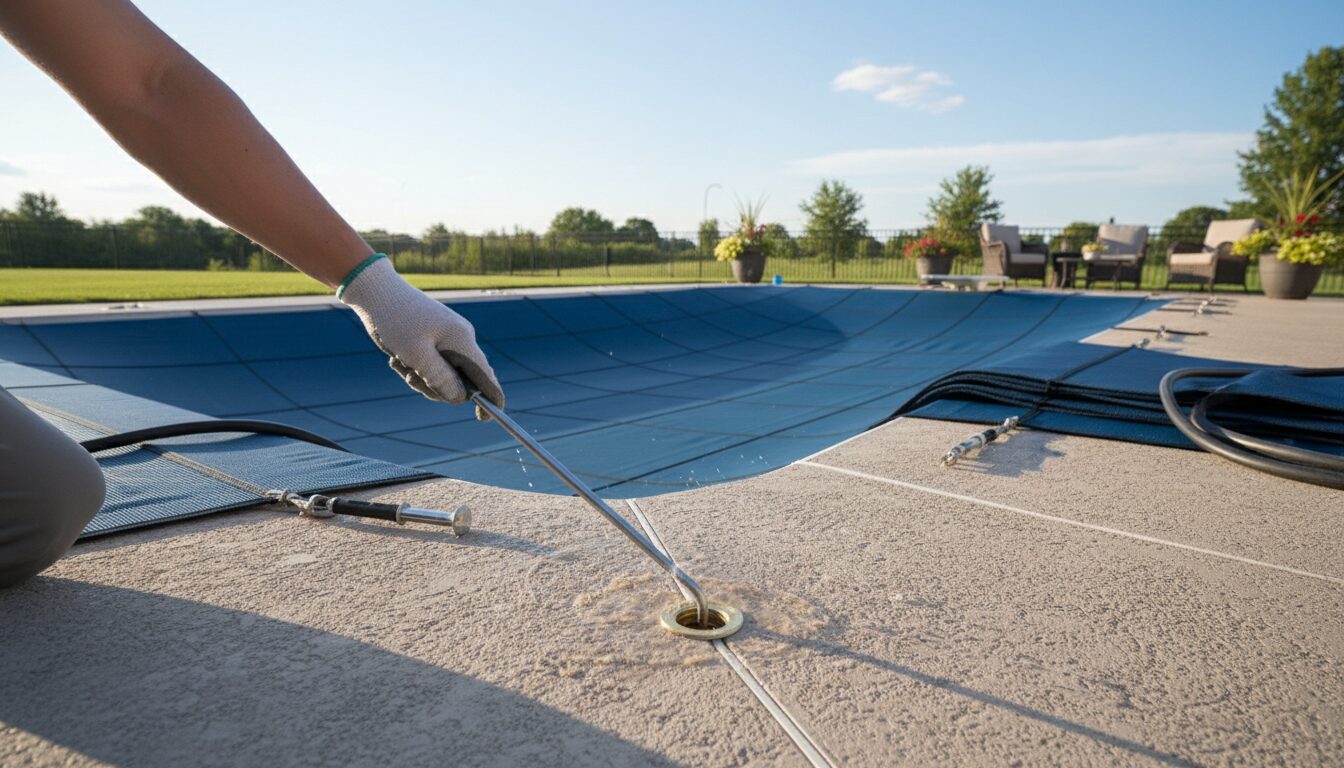
Insert the anchor removal tool into the anchor, thread it in until you feel it catch, then pull upward with steady, even pressure. Most brass anchors in good condition come out in one smooth motion. Do not twist aggressively or jerk – brass threads strip easily, especially in anchors that have been through several winters. If an anchor resists after light pressure, stop and treat it as a stuck anchor (see below) rather than muscle through it.
Step 4: Deal with Seized or Corroded Anchors
If an anchor won’t budge after applying the tool, apply penetrating oil directly into the anchor opening and around the base where it meets the concrete. Wait at least 10-15 minutes – not 30 seconds. Then try again. If it still won’t move, a gentle rocking motion with the tool (not a full twist, just slight side-to-side while pulling up) can break the corrosion bond. Skovish Pools’ breakdown of common anchor problems covers several scenarios here, including what to do when the anchor housing itself has loosened from the concrete sleeve.
Step 5: Cap or Plug Every Hole Immediately
As you remove each anchor, thread the brass cap or rubber plug in flush with the deck surface right away. Never leave an open anchor hole uncapped, even temporarily. An uncapped hole collects debris, invites insects, and is a genuine trip hazard. If you’ve lost a cap, a piece of duct tape over the hole is better than nothing until you can source a replacement.
Step 6: Clean and Lubricate the Anchors Before Storing
Once all the anchors are out, rinse each one with fresh water and dry it completely. Apply a thin coat of lithium grease or silicone lubricant to the threads before storing them in a labeled bag or box. This one step is what separates anchors that come out easily next spring from ones that fight you every year. If your water chemistry has been running aggressive (low pH, high chlorine), those anchors face more corrosion than average – which is also a good reminder to balance your water before closing season even begins. If you’ve noticed a slight green tint to the water as you’re getting ready to close, tracking down that tint before you put the cover on saves you a much worse problem in the spring.
When an Anchor Housing Needs to Come Out of the Concrete
Sometimes the anchor body spins freely in its sleeve, the housing has cracked, or the threads inside are completely stripped. In those cases, the anchor itself has to come out of the concrete, not just be lifted from it. Here’s how to handle that:
- Use a masonry bit (1/2 inch for most standard anchor sleeves) in a hammer drill to core around the housing until the concrete grip loosens.
- Use needle-nose pliers or locking pliers to grip the housing and work it out.
- Clean the hole of all debris and dust.
- Press or hammer the new anchor housing in, following the manufacturer’s spec for depth. Most sit about 1.5 to 2 inches below the surface.
- Allow any adhesive or epoxy (some kits use it, some don’t) to cure before reinstalling the anchor. Replacing pool cover anchors in concrete is a more involved job than standard seasonal removal but is entirely DIY-able in an afternoon.
Replacement anchor kits for common brands run $5-$15 per anchor. If you have 30 anchors (typical for a 16×32 pool), replacing a few damaged ones adds $30-$60 to your closing costs – still well below the cost of a service call. Pool Center’s guide on replacing deck anchors walks through hardware compatibility if you’re not sure which replacement anchor matches your existing cover system.
Common Mistakes to Avoid
- Over-tightening the removal tool: Threading in too hard strips the brass anchor threads, turning a stuck anchor into a broken one. Use firm hand pressure only.
- Skipping the lubricant step: Dry threads corrode faster. Two minutes of greasing now prevents an hour of fighting next fall.
- Leaving any anchor uncapped: Water gets into the hole, freezes, expands, and can crack the surrounding concrete – especially in climates that see temperatures below 20 degrees Fahrenheit.
- Storing anchors in a damp location: Even with lubrication, brass corrodes in a wet garage or shed. A dry, sealed container is worth the effort.
AquaDoc makes a closing kit that includes a thread-protecting lubricant designed for brass pool hardware, which some pool owners toss in with their anchor storage bag so they don’t have to hunt for it the following fall.
Frequently Asked Questions
How do you remove a stuck safety cover anchor from concrete?
Use a dedicated anchor removal tool threaded into the anchor body and pull straight up with steady pressure. If the anchor is seized, apply penetrating oil like WD-40 into the opening, wait 10-15 minutes, then try again. Prying from the side or using excessive torque risks stripping the threads and cracking the surrounding concrete, so patience matters more than force here.
Can you remove a safety cover anchor without a special tool?
You can thread a bolt into the anchor and use a claw hammer or slide hammer to pull it free, but a dedicated anchor removal tool costs $15-$30 and is far more reliable. Improvised methods risk stripping the brass threads, which turns a straightforward pull into a full housing replacement job. If you close your pool every year, the tool pays for itself after the first season.
What do you do with the holes after removing safety cover anchors?
Cap every anchor hole immediately with the brass or rubber cap that came with your system, threaded or pressed flush with the deck surface. This prevents debris from filling the hole, keeps insects out, and eliminates a trip hazard. Before capping, apply a thin coat of lithium grease to the threads so the cap comes off easily next spring.
How do you replace a safety cover anchor in concrete that is completely stripped or broken?
Drill out the existing housing with a 1/2-inch masonry bit in a hammer drill, work the old housing free with pliers, clean the hole, and press or hammer in a replacement anchor housing. Replacement anchors cost $5-$15 each, and the full job takes 20-30 minutes per anchor. Let any epoxy or adhesive cure fully before reinstalling the anchor bolt or cap.
Should safety cover anchors be flush with the deck when the cover is off for winter?
Yes. All anchors should sit flush with or slightly below the deck surface whenever the cover is removed. Proud anchors create a trip hazard and allow water to pool inside the housing, which can freeze and crack the concrete around it during hard winters. Capping anchors flush is a 30-second step that protects both people and your deck.
Removing safety cover anchors from concrete is a 20-to-30-minute job when the anchors cooperate and a bit longer when they don’t – but working methodically with the right tool, a little penetrating oil, and grease on the way back in keeps this from being the thing that derails your whole pool closing.