
You pull out the mesh safety cover, start stretching it across the pool, and then realize you never actually checked whether the water level is right. It is one of those closing-day details that seems minor until spring, when you peel the cover back and find a stained waterline, stressed anchors, or a bloom of algae that grew right where the cover was kissing the surface all winter.
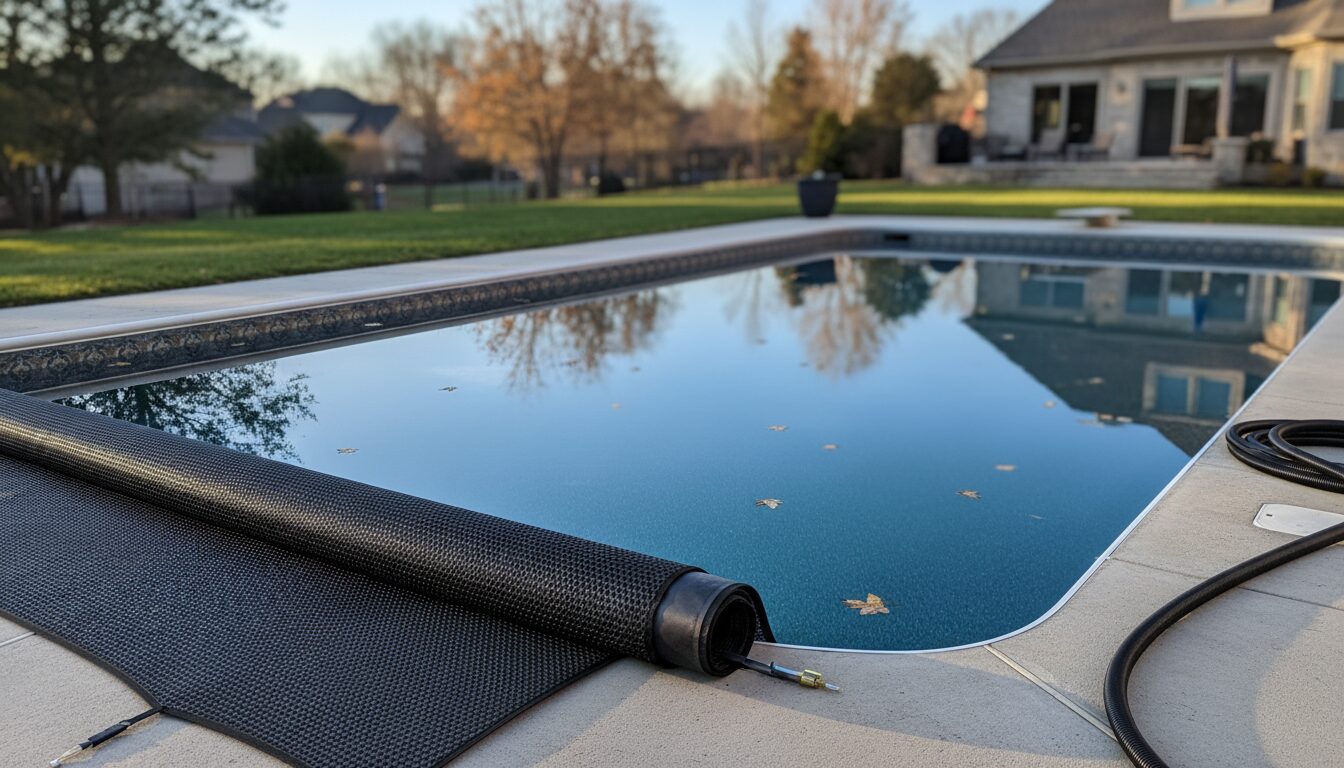
For most inground pools with a mesh safety cover, drop the water level 12 to 18 inches below the bottom of the skimmer opening before you install the cover. That is the range professionals use across the industry, and the rest of this article walks through why that range exists, how to find your specific number based on pool type and climate, and how to calculate exactly how many gallons you need to remove.
Why the Water Level Matters More With a Mesh Cover Than a Solid Cover
A solid winter cover and a mesh safety cover behave very differently. A solid cover is designed to keep water out entirely, so you pump standing water off the top all winter with a cover pump. A mesh cover is intentionally porous: rain and snow melt pass through the fabric and into the pool rather than collecting on top. That is what makes mesh covers so practical, but it also means the water inside the pool will slowly rise throughout the winter every time it rains.
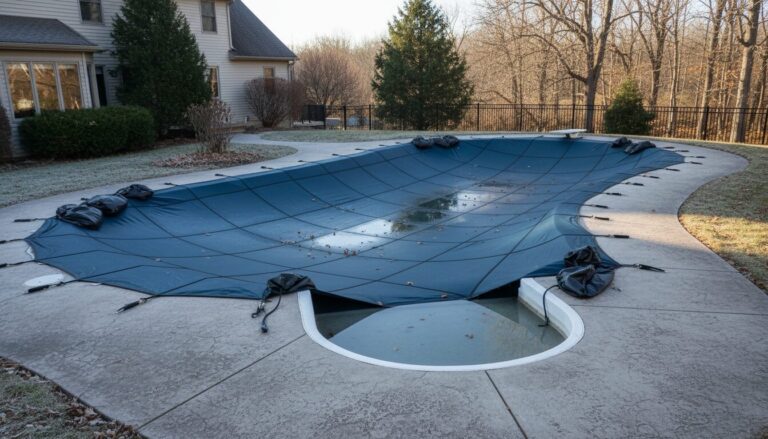
If you start the season with the water already close to the cover, any significant rainfall will push the level up until the cover surface is resting on the water. Once that happens, the mesh acts like a net holding leaves and debris right against your pool finish. Those leaves break down, stain plaster or vinyl, and feed algae colonies that will greet you in the spring. Dropping the level adequately before closing creates the buffer the cover needs to do its job all winter without touching the water.
The Standard Range: 12 to 18 Inches Below the Skimmer
The 12-to-18-inch range is not arbitrary. It accounts for three things: the typical amount of precipitation a pool collects over a winter season, the sag a mesh cover develops under a heavy snow load, and the clearance needed to keep deck anchors under tension. Here is how to narrow down where you fall in that range.
- Climate and rainfall: In the Pacific Northwest or Southeast where winter rain is heavy and frequent, start at the full 18 inches. In drier cold climates like Colorado or Utah where most winter precipitation is snow that melts slowly, 12 to 14 inches is usually enough.
- Pool construction type: Gunite and plaster pools can sit with the water at or just below the tile line without structural risk. Vinyl liner pools benefit from dropping closer to 18 inches because repeated freeze-thaw cycles at a high water level can stress the liner bead. Fiberglass pools sit between the two.
- Cover size and span: A cover stretched across a large pool will sag more in the center under snow than a cover on a small pool. If your pool is wider than 20 feet, err toward 16 to 18 inches to give the sag somewhere to go without reaching the water.
- Return jet position: As a practical checkpoint, your water level after draining should be at least 3 to 6 inches below your lowest return jet. If it is not, the jet opening is exposed to freezing air all winter without enough protection from the water mass below it.
Worked Example: How Many Gallons to Remove
Say you have a 16×32 inground rectangular pool with an average depth of 5.5 feet. That pool holds roughly 21,000 gallons. You want to drop the water 15 inches below the skimmer, which sits about 6 inches above the current waterline. So you are actually lowering the surface by about 9 net inches from where it sits today.
To calculate gallons, multiply the pool’s surface area by the drop in feet. A 16×32 pool has 512 square feet of surface. Nine inches equals 0.75 feet. Multiply 512 by 0.75 and you get 384 cubic feet. One cubic foot of water equals 7.48 gallons, so 384 times 7.48 is roughly 2,870 gallons to remove. A standard 1.5 HP submersible pump moves about 50 to 70 gallons per minute, so you are looking at under an hour of pumping time. If you need a quick reference on your pool’s total volume before you start doing this math, the guide on how many gallons a 15×30 inground pool holds by depth shows the same surface-area method applied to a common pool size.
Step-by-Step Process for Dropping the Level Before Cover Installation
- Step 1: Mark your target level. Use a piece of waterproof tape or a grease pencil on the pool wall to mark exactly where the water surface needs to end up. Measure down from the skimmer bottom, not from the coping.
- Step 2: Choose the right pump. A submersible utility pump dropped into the deep end works well. Run the discharge hose away from the pool so the water does not flow back in. Check local codes about where you can discharge pool water.
- Step 3: Check the return jets as you go. When the water level drops below the returns, the pump and filter are no longer pulling water through the system. You can now blow out and plug the returns, which is part of your standard winterization before the cover goes on.
- Step 4: Stop at your marked line. Do not overdrain. For vinyl liner pools, leaving the pool completely empty or draining below 24 inches risks the liner floating or pulling away from the walls if groundwater pressure rises. For gunite and plaster pools, a fully drained pool in cold weather risks frost heave damage.
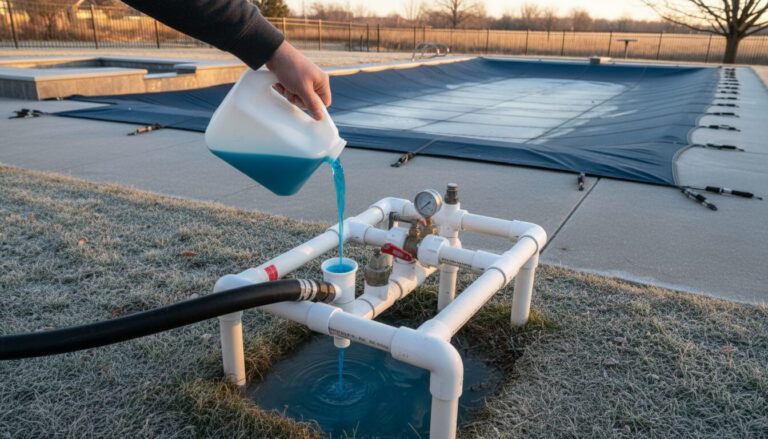
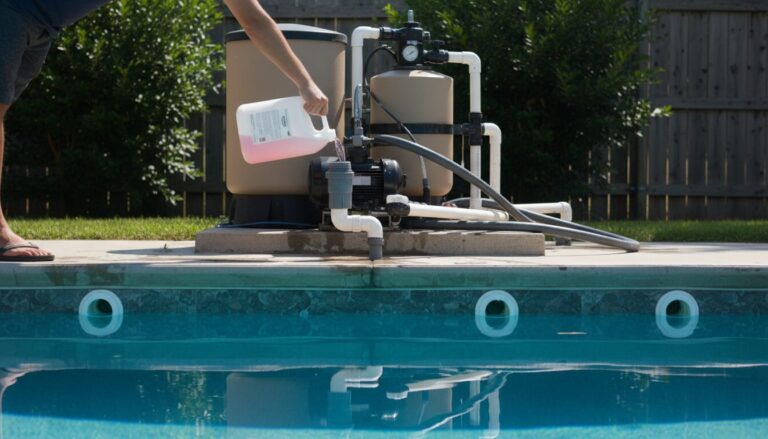
- Step 5: Install the cover immediately. Once the level is right and your winterization chemicals are balanced, get the cover on before additional rain raises the level again. AquaDoc’s winterizing enzyme and algaecide treatments are designed to go in right at this stage, before the cover is closed, so the water stays clear through the off-season.
Common Mistakes That Cause Spring Problems
Not dropping the level far enough is the most common error, but it is not the only one. Here are the mistakes that lead to calls to pool professionals every April.
- Measuring from the coping instead of the skimmer: Coping height varies by pool design, so it is not a reliable reference point. Always measure from the bottom edge of the skimmer throat, which is a fixed structural feature.
- Skipping the level check in wet winters: Mesh covers let precipitation through, so the level rises all season. In a wet winter, a pool that started at the right level can be 6 to 8 inches higher by February. Check the level once a month and pump out the excess if the cover is starting to belly down toward the water.
- Draining too far on a vinyl liner pool: Dropping more than 24 inches below the skimmer on a vinyl liner creates real risk of the liner losing its seat. The liner holds its shape partly because of the water weight pressing it against the walls. Remove too much and you can return in spring to a liner that has shifted, bubbled, or torn at the seam.
- Not accounting for the deep end: The water level measurement is taken at the skimmer, which is typically in the shallow end. The deep end will have considerably more water remaining, which is exactly what you want. If you are unsure how cover sag and depth interact with your specific pool shape, the article on safety cover installation cost for a 16×32 inground pool with irregular steps covers how cover geometry affects the installation itself.
Quick Reference by Pool Type
| Pool Type | Recommended Drop Below Skimmer | Notes |
|---|---|---|
| Gunite / Plaster | 12 to 15 inches | Tile line protection is the main concern in freeze climates |
| Vinyl Liner | 15 to 18 inches | Never exceed 24 inches or the liner may lose its seat |
| Fiberglass | 12 to 15 inches | Groundwater pressure risk if drained too far in high water table areas |
| Any type, wet climate | 18 inches | Maximum buffer for heavy winter precipitation pass-through |
| Any type, dry or cold climate | 12 to 14 inches | Less precipitation rise expected over winter |
The column that matters most for your decision is climate, not pool construction. Pool type shifts the number by about 3 inches in either direction. Climate shifts it by up to 6 inches. If you are in a wet climate with a vinyl liner pool, you land at 18 inches without question. If you are in a dry cold climate with a gunite pool, 12 inches is enough and going further adds unnecessary risk.
Frequently Asked Questions
How much water should I remove from an inground pool before putting on a mesh safety cover?
For most inground pools with a mesh safety cover, drop the water level 12 to 18 inches below the skimmer opening, which typically puts it 3 to 6 inches below the return jets. This keeps water away from the tile line in freeze climates and prevents the mesh from sagging into the water and collecting debris over the winter.
Should I drop the water level more for a gunite pool than a vinyl liner pool before winter?
The difference is modest but real. Gunite and plaster pools are generally fine at 12 to 15 inches below the skimmer. Vinyl liner pools benefit from 15 to 18 inches because freeze-thaw movement at a higher water level puts stress on the liner bead and tracking. Never drop a vinyl liner pool more than 24 inches below the skimmer, or you risk the liner losing contact with the walls.
What happens if I leave the water too high under a mesh safety cover?
If the water is too high, the cover will sag under the weight of rain and snow melt until it contacts the water surface. That contact traps leaves and debris against your pool finish, feeds algae, and can stain plaster or vinyl over a full winter. It also puts extra tension on the anchor straps and can loosen or pull out deck anchors by spring.
How much water should I remove from a 15×30 inground pool before winter with a mesh cover?
A 15×30 inground pool with an average depth of 5 feet holds roughly 16,900 gallons. Dropping the water 15 inches below the skimmer removes approximately 1,400 to 1,600 gallons depending on pool shape, which takes about 2 to 3 hours with a standard 1.5 HP submersible pump. Mark your target level on the pool wall before you start so you do not overshoot.
Do I need to drain water from under the mesh cover all winter if it rains a lot?
You do not need to drain water that passes through the mesh, because mesh covers are designed to let rain and snow melt flow into the pool rather than sit on top. The concern is that the pool water level inside rises enough to contact the underside of the cover. In wet climates, check the level once a month and pump out the excess if the cover is beginning to belly toward the water surface.
The bottom line: drop your inground pool water to 12 to 18 inches below the skimmer before installing a mesh safety cover, with the higher end of that range for vinyl liner pools and wet climates. That buffer is what keeps the cover working properly and your pool finish clean all winter long.