
Fall pool maintenance before closing comes down to one core idea: the water sitting under that cover all winter will not get better on its own. Balance your chemistry first (pH 7.2-7.4, alkalinity 80-120 ppm, calcium hardness 200-400 ppm), shock the pool, let it recover, add algaecide, then lower the water and close. Skip or rush any of these steps and you are almost guaranteeing a rough spring opening. The whole process takes about a week when done right.
Why Fall Chemistry Work Is More Important Than the Closing Kit
Most pool owners think closing is about the chemicals you add on shutdown day. It is not. It is about the state of the water before you add anything. Closing chemicals cannot fix water that is already out of balance. If your pH is too high, your shock will not work effectively. If your calcium is too low, the water will pull minerals from your plaster or vinyl liner over a long winter. A closing kit dropped into unbalanced water is mostly a waste of money.
Start testing water at least one week before your planned closing date. Give yourself enough time to make adjustments, let the water stabilize, and still complete the shutdown steps in order. Rushing this into a single afternoon is the most common mistake pool owners make in fall.
What Order Should You Do Fall Pool Maintenance?
Sequence matters here. Do these steps out of order and you will undermine work you already did. Here is the right order:
- Test and balance total alkalinity first. Target 80-120 ppm. Alkalinity is the foundation – if it is off, pH will not hold no matter what you add. If you have struggled with this before, the chemistry principles are the same whether you run a salt or chlorine pool, so the approach applies either way.
- Balance pH to 7.2-7.4. Slightly lower than the normal midpoint because pH tends to creep upward during a long winter shutdown.
- Adjust calcium hardness to 200-400 ppm. Low calcium is especially damaging over winter when the water has months to leach minerals from pool surfaces.
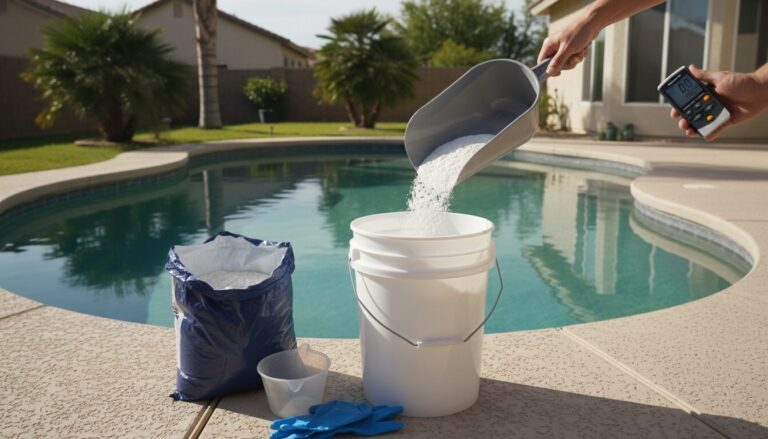
- Shock the pool. Use a calcium hypochlorite shock at 2 lbs per 10,000 gallons, or 1 lb per 10,000 gallons if the water is already clean and clear. Do this in the evening so sunlight does not burn off the chlorine before it can work.
- Run the pump for 8-12 hours after shocking to circulate everything fully.
- Wait for chlorine to drop to 1-3 ppm (usually 5-7 days). Do not add algaecide while chlorine is still high – it will break down the algaecide before it can do anything.
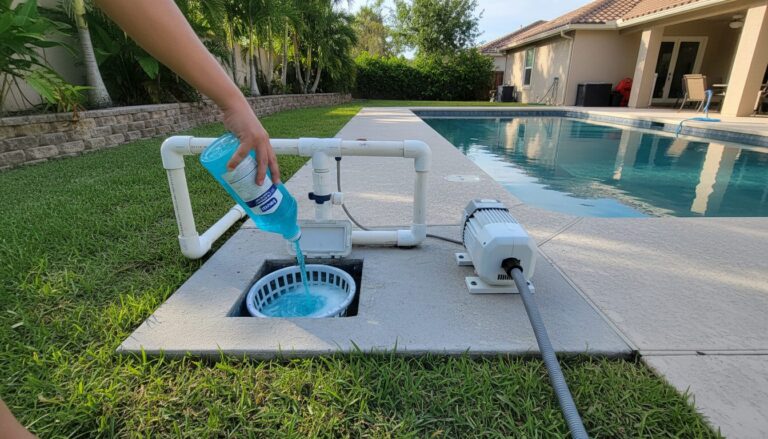
- Add a winterizing algaecide. A polyquat 60 algaecide (60% concentration) is the standard choice. It does not foam, does not stain, and it lasts through a long winter. Dose according to label – typically 16 oz per 10,000 gallons for closing.
- Add a stain and scale product if you have hard water or a history of metal staining. This is especially worth doing if your source water is high in iron or copper.
How to Handle Your Filter Before Closing
Clean or backwash your filter before closing, not after. You want clean media going into winter, not a filter full of debris sitting dormant for four months. For cartridge filters, pull the cartridges out, rinse them thoroughly, and store them indoors if possible. For sand and DE filters, do a final backwash, then make sure the drain plug is out if the filter housing is in a location that could freeze. If you want a deeper look at filter differences, this breakdown of sand vs cartridge vs DE filters covers what each type needs at closing time.
One thing people forget: if you have a DE filter, do not add fresh DE before closing. You will just pull it all back out in spring anyway. Backwash, let it drain, and leave the grids clean.
Lowering the Water Level and Blowing Out Lines
For an inground pool, lower the water to 4 to 6 inches below the skimmer opening. This protects the skimmer from freeze damage. If you have a mesh cover that allows precipitation through, you may need to go 12 inches below the returns – check your cover manufacturer’s guidance because overshooting this is just as bad as undershooting it.
Blowing out the plumbing lines is where most DIY closings get skipped or done wrong. Any water left sitting in underground pipes can freeze, expand, and crack the pipes. Use a shop vac or a dedicated line blower to push air through every return line, the skimmer, and any auxiliary lines until no water comes out. Then plug the returns with expansion plugs and plug or cap the skimmer. If you are not confident doing this step yourself, it is worth hiring a pool service company for just this part – a cracked underground pipe is an expensive fix compared to the cost of a pro blowout.
Common Fall Closing Mistakes Worth Avoiding
Beyond rushing the process, here are the specific mistakes that cause real problems:
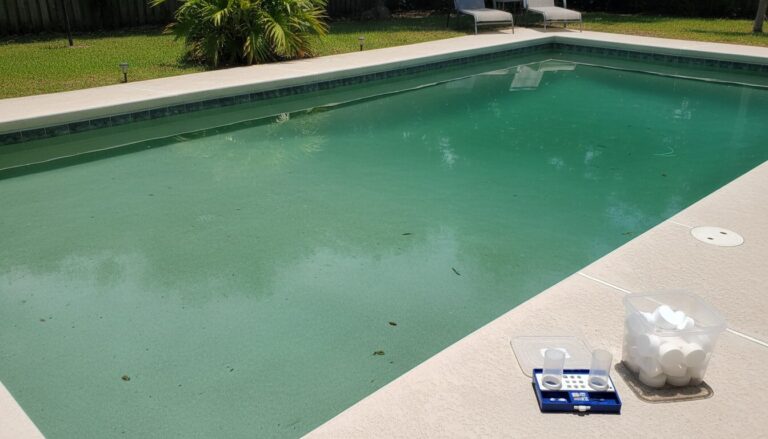
- Closing with algae already present. If you see any green or haze in the water, clear it completely before closing. Algae will thrive under a dark cover all winter and you will open to a full bloom in spring.
- Skipping the algaecide because the water looks fine. Closing algaecide is not for visible algae – it is insurance against spores that are already in the water in trace amounts. A polyquat algaecide does its job quietly over the whole winter.
- Adding shock and algaecide on the same day. Chlorine from the shock destroys algaecide. Always wait for chlorine to drop to 1-3 ppm before adding the algaecide.
- Leaving pool toys, ladders, and accessories in the water. Metal components left in the pool over winter can leach iron and copper into the water, causing staining by spring.
- Putting the cover on a dirty pool. Leaves and debris trapped under the cover decompose, drive up phosphates, and give algae exactly what it needs.
A Note on Closing Chemical Kits
Closing kits sold at big-box stores are convenient but often generic. They are sized for “up to X gallons” on the label and assume your water is already balanced – which yours may not be. Use a kit as a starting point for the algaecide and shock components, but do your own water test and balance the chemistry independently. AquaDoc makes a pool closing kit that includes a polyquat algaecide and a stain and scale preventer together, which is a combination a lot of pool owners find useful because staining is one of the more underrated winter risks. That said, the chemistry steps above matter more than which brand you choose for the chemicals themselves.
Frequently Asked Questions
What chemicals should I add before closing my pool?
Balance your pH (7.2-7.4), total alkalinity (80-120 ppm), and calcium hardness (200-400 ppm) first. Then shock the pool, let chlorine drop to 1-3 ppm, and add a winterizing algaecide. Some owners also add a stain and scale preventer, especially if they have hard water.
What pH should my pool be before closing for winter?
Aim for a pH of 7.2 to 7.4 before closing. Slightly on the lower end of the normal range is better because pH tends to drift up over the winter, and you want it landing in a safe zone by spring.
How long before closing should I shock my pool?
Shock the pool 5 to 7 days before your closing date. This gives chlorine time to work through any organic load and then drop back to a safe level (1-3 ppm) before you add algaecide, which chlorine can destroy if levels are still high.
Should I run the pump after adding closing chemicals?
Yes. Run the pump for at least 8 to 12 hours after adding balancing chemicals and shock. This circulates everything evenly before you shut the equipment down for the season.
Do I need to lower the water level before closing my pool?
For inground pools with skimmers, lower the water 4 to 6 inches below the skimmer opening to prevent freeze damage. For pools with a mesh cover that allows rain and snow to pass through, you may need to lower it further – follow your cover manufacturer’s guidance.
The pools that open cleanest in spring are the ones closed most carefully in fall. Put the time in now and you will spend the first warm weekend swimming, not fighting green water.