
You’ve probably stood at the edge of your pool on a Saturday morning, skimmer pole in hand, wondering if there’s a better way. Vacuuming by hand works, but it takes time, and the options at the pool store range from $80 suction crawlers to $1,500 robotic units. So which one actually makes sense for your situation?
The short answer: suction cleaners are the best value for most pool owners, robotic cleaners are worth it for larger pools or busy schedules, and manual vacuuming is something you should keep in your toolkit regardless. This article walks through how each type works, what it costs, where each one falls short, and how to match the right cleaner to your actual pool.
How Each Type of Pool Cleaner Works
Understanding the mechanics helps you predict performance – and avoid buyer’s regret.
Suction-Side Cleaners
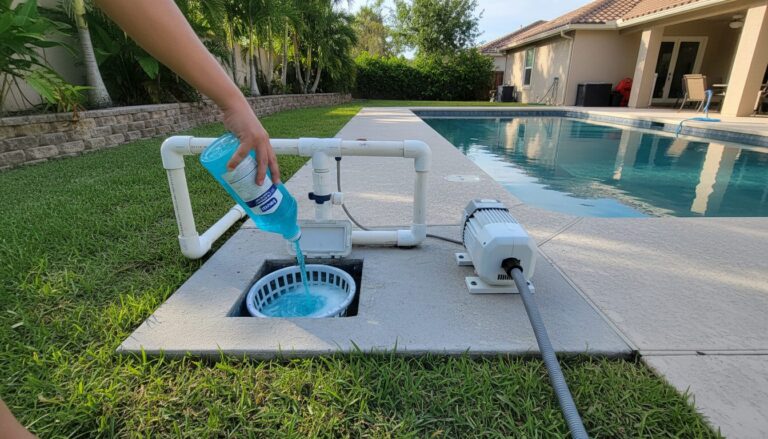
A suction cleaner connects to your skimmer or a dedicated suction port and uses your pump’s flow to move around the pool floor. Debris gets pulled through the cleaner and into your filter. They’re simple, reliable, and cheap to run because they borrow power from a system you’re already running. The trade-off: everything they pick up goes through your filter, which means more frequent backwashing or cartridge cleaning. Some pool owners find the vacuum plate setup makes suction cleaning significantly faster to connect and disconnect.
Robotic Cleaners
A robotic cleaner is a self-contained unit with its own motor, pump, and filter bag or cartridge. You drop it in, plug it into a standard outdoor outlet, and it navigates the pool on a programmed pattern – scrubbing walls, floors, and sometimes waterlines. It runs completely independent of your pool’s filtration system, so it doesn’t add load to your pump or filter. Most cycles take 2 to 3 hours.
Manual Vacuuming
Manual vacuuming uses a vacuum head, a telescoping pole, and a hose connected to your skimmer or a dedicated port. You push it around the pool yourself. It’s slower, but it gives you complete control over where the cleaner goes – which matters when you’re dealing with a specific problem area, heavy debris after a storm, or fine silt that an automatic cleaner keeps stirring up instead of capturing.
Side-by-Side Comparison
| Feature | Suction Cleaner | Robotic Cleaner | Manual Vacuum |
|---|---|---|---|
| Upfront Cost | $80 – $300 | $500 – $1,500+ | $30 – $80 (equipment only) |
| Ongoing Cost | Increased filter wear | $0.07 – $0.12/cycle electricity | Your time |
| Owner Time Required | 5 min setup, automated run | 2 min drop-in, automated run | 20 – 40 min per session |
| Wall Cleaning | Some models, partial | Yes, most models | Yes, with effort |
| Filter Impact | High – debris goes to your filter | None – self-contained | Moderate – can vacuum to waste |
| Best Pool Size | Up to 20,000 gal | 15,000 gal and up | Any size |
| Handles Fine Debris | Moderate | Good (with fine filter bag) | Best (vacuum to waste) |
Why These Differences Matter for Your Decision
The filter impact column deserves more attention than it usually gets. When a suction cleaner pulls debris into your pool’s filtration system, your filter reaches capacity faster. If you have a cartridge filter, that means more frequent cleanings – potentially every 2 to 3 weeks instead of every 4 to 6 weeks during heavy use. If you have a sand filter, you’ll backwash more often, which wastes water. For pools with high leaf load or lots of fine silt, this ongoing cost adds up.
Robotic cleaners sidestep this entirely. Their onboard filter bag captures debris independently, and you empty it after each run. That also means your pool’s pump and filter are free to focus on water circulation and chemical distribution – which matters for water quality, not just cleanliness.
The manual vacuum’s biggest advantage is precision. Automatic cleaners follow programmed or random paths; they miss corners, steps, and tight spots near returns. A manual vacuum goes exactly where you point it. When you’re dealing with an algae outbreak or fine silt settling in one corner, that control is genuinely useful.
A Worked Example: Choosing for a 20,000-Gallon In-Ground Pool
Say you have a 20,000-gallon in-ground pool in a yard with two large oak trees. Leaf debris is constant from April through December. You work full-time and want to spend 30 minutes or less on pool care each week.
A suction cleaner at $200 will handle the daily light debris, but the leaf load will overwhelm its trap and your filter basket constantly. You’ll spend 10 to 15 minutes per day clearing clogs. A robotic cleaner at $900 to $1,200 with a large debris basket handles leaves without choking – and its independent filter means your pool’s system isn’t fighting the debris load. Over a single season, the time savings alone justify the price difference. You’d still want a manual vacuum on hand for the rare deep clean or post-storm session.
For a 10,000-gallon above-ground pool in a cleaner yard, the math flips. A $150 suction cleaner does the daily work, and manual vacuuming once every two weeks handles the rest. Spending $800+ on a robotic unit for that situation is overkill.
Common Mistakes People Make
- Buying a robotic cleaner for a small pool: The time savings don’t justify the cost for pools under 12,000 gallons that take 15 minutes to vacuum by hand.
- Skipping manual vacuuming entirely: Automatic cleaners don’t replace manual vacuuming – they reduce how often you need it. Steps, tight corners, and problem spots still need attention a few times per season.
- Running a suction cleaner 24/7: Suction cleaners are designed for a few hours per day, not continuous operation. Running them too long wears out the diaphragm and puts unnecessary load on your pump.
- Ignoring chemistry after cleaning: Vacuuming stirs up settled debris and algae spores. Test your water after a thorough vacuuming session and adjust chlorine if needed. AquaDoc’s pool shock is something a lot of owners keep on hand specifically for post-cleaning treatments when chlorine demand spikes.
- Assuming price equals quality for robotics: A $500 robotic cleaner handles most residential pools fine. The $1,500 models add navigation smarts and larger debris baskets – genuinely useful for bigger pools with heavy debris, but not a meaningful upgrade for a clean 15,000-gallon pool.
Which Type Is Actually Right for You
Use this as a quick decision filter:
- Get a suction cleaner if your budget is under $300, your pool is under 20,000 gallons, and debris is moderate. It’s the right tool for most residential pools.
- Get a robotic cleaner if your pool is 15,000 gallons or larger, you have heavy debris (leaves, pets, high bather load), or you want to genuinely minimize hands-on maintenance time. Budget $600 minimum for a unit worth owning.
- Keep a manual vacuum regardless of what you buy. It costs under $80 for a basic setup and handles situations no automatic cleaner manages well – algae scrub-downs, silt settling after a storm, and post-shock cleanup. Understanding how your vacuum hose and connections work also helps you troubleshoot faster when something goes wrong with an automatic cleaner.
The pool professionals at River Pools make a point that rings true for cleaning equipment too: the best setup is the one you’ll actually use consistently. A $1,200 robotic cleaner sitting in a garage because the setup feels like a hassle is worse than a $150 suction cleaner running every day.
Frequently Asked Questions
Is a robotic pool cleaner worth the money?
For pools over 15,000 gallons that you use regularly, yes – a robotic cleaner typically runs 3 to 5 years before needing major service, and the time savings add up fast over a season. If your pool is small or you open it for only a few months, a suction cleaner or manual vacuum is a better value for the money.
What is the cheapest way to keep a pool clean?
A suction-side cleaner is the most cost-effective automated option, running $80 to $300 upfront with minimal ongoing cost. Manual vacuuming costs almost nothing beyond the equipment itself, but it takes 20 to 40 minutes per session – so the savings come directly out of your time.
Can a suction cleaner replace manual vacuuming?
For routine debris pickup, mostly yes. A suction cleaner handles daily light dirt well enough that most pool owners only manual vacuum a few times per season. For heavy algae, fine silt, or post-storm cleanup, manual vacuuming to waste is more thorough and gives you control a suction cleaner can’t match.
What size pool is a robotic cleaner best for?
Robotic cleaners make the most sense for in-ground pools of 15,000 gallons or more, or any pool where owner time is genuinely limited. Smaller above-ground pools under 10,000 gallons are usually cleaned just as effectively by a suction cleaner at a fraction of the price.
Do robotic pool cleaners use a lot of electricity?
No – most robotic pool cleaners draw 180 to 250 watts and run 2 to 3 hours per cycle, using roughly 0.5 kWh per session. At average US electricity rates, that works out to about $0.07 to $0.12 per cleaning cycle, making electricity cost a non-issue in the purchase decision.
The right cleaner isn’t the most expensive one or the one your neighbor swears by – it’s the one that matches your pool size, debris load, and how much time you’re willing to put in. For most pool owners, a suction cleaner plus a manual vacuum covers everything; for larger or heavily used pools, a robotic unit earns its price.