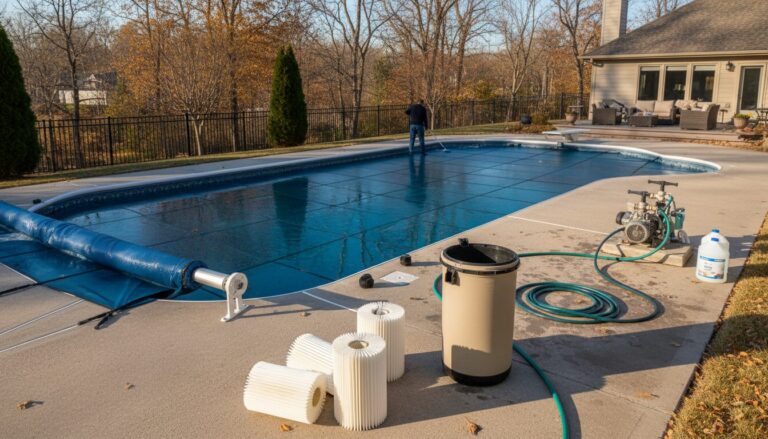


You pull the cartridge element out of the filter housing at closing time, give it a quick rinse with the garden hose, and stash it in a corner of the garage. Come spring, it’s warped, the pleats are matted with mildew, and one end cap has a hairline crack. Sound familiar? That one shortcut costs you anywhere from $30 to $150 for a replacement cartridge before you’ve even opened the pool.
The good news is that proper winter storage for a pool cartridge filter element takes less than 24 hours of actual effort, and it reliably gets you the full 3-to-5-year lifespan out of your investment. This article walks through the right way to clean the element before storage, how to dry it completely, the best place to keep it, and the mistakes that cause cracking and warping in the first place. If you already went through the full pool closing process, the signs that a cartridge is already past its useful life are worth reviewing before you bother storing an element that won’t make it through another season anyway.
Why Cartridge Elements Crack and Warp in the First Place
Before getting into the fix, it helps to understand the failure modes, because each one has a specific cause you can avoid.
- Freeze Damage: A cartridge element holds water in its pleats and end cap seals. If temperatures drop below 32°F while the element is still wet, that water expands as it freezes and physically splits the polyester fabric or cracks the molded end caps. This is the most common cause of cracking in cold climates.
- Heat Warping: Storing the element in an uninsulated garage or shed where summer temperatures can spike above 120°F – which is not unusual in a metal shed – softens the thermoplastic end caps and causes them to warp out of round. A warped end cap will not seat properly against the filter housing O-ring, and you will have a bypass leak the moment you restart the pump.
- Mildew and Fiber Breakdown: Storing a damp cartridge in a sealed or low-airflow space lets mildew colonize the polyester pleats. The mildew itself does not crack the element, but the staining is almost impossible to remove later, and the organic acids produced during mold growth degrade the polyester fibers over time, reducing filtration efficiency.
- Physical Distortion: Stacking heavy objects on top of a stored cartridge, or laying it on its side with weight pressing down on it, permanently deforms the pleats. Crushed pleats reduce the effective filter surface area and increase head pressure, which means your pump works harder for worse results.
Step 1: Clean the Element Thoroughly Before It Goes Into Storage
Never put a dirty cartridge into storage. Oils, calcium, and organic debris left in the pleats over the off-season harden and become much harder to remove in spring. More importantly, organic debris feeds microbial growth during storage. A proper cartridge cleaning routine starts with a plain water rinse and then moves to a chemical soak.
- Rinse with a garden hose. Work from the top of the element down, directing the spray between each pleat at about a 45-degree angle. A direct blast straight into the pleat can force debris deeper into the fabric rather than flushing it out. Work all the way around the element and repeat until the water running off is visibly clear.
- Soak in a filter cleaning solution overnight. Mix a dedicated cartridge filter cleaner in a large plastic trash can or storage bin – a standard 55-gallon drum works well for most residential elements. Submerge the cartridge completely and leave it for a minimum of 8 hours, though overnight (12 to 14 hours) is ideal. The soak loosens oils and sunscreen residue that a hose rinse alone cannot remove. AquaDoc makes a cartridge filter cleaner formulated specifically for this soak step that pool owners use as part of their annual closing routine.
- Rinse again after the soak. This second rinse is not optional. Residual cleaner left in the pleats can accelerate fabric degradation over a long winter storage period. Rinse until the water runs completely clear with no suds.
- Acid wash only if you have calcium scale. If you see white, crusty buildup on the pleats that did not dissolve during the soak, a diluted muriatic acid solution (1 part acid to 20 parts water) will dissolve it. This is not a routine step – use it only when scale is visibly present. Always add acid to water, never water to acid, and work outdoors with gloves and eye protection.
The Allied Pools guide to cartridge filter maintenance reinforces the point that skipping the soak step and relying on rinsing alone leaves enough contamination in the pleats to cause real problems over an extended off-season.
Step 2: Dry the Element Completely – This Is the Critical Part
If you only remember one thing from this article, make it this: the cartridge must be bone dry before it goes into storage. Not mostly dry. Not dry on the outside. Completely dry, all the way through the pleated media.
Stand the element upright on a clean surface in a shaded, well-ventilated area – out of direct sunlight, which can degrade the polyester fabric and soften the end caps. Leave it for at least 24 hours in warm weather, or 48 hours if your fall temperatures are cool and humidity is high. You can speed the process by setting a box fan nearby to circulate air. Flip the element upside down halfway through so both end caps drain fully.
How do you know it’s actually dry? Pick it up and feel the weight. A fully dry cartridge is noticeably lighter than a damp one. Press firmly on a few of the inner pleats – if you feel any cool dampness against your fingers, give it another 12 hours. Do not rush this step to get the pool closed faster. A damp cartridge going into a cold garage is a cartridge you are likely replacing next spring.
Where to Store It: Temperature and Environment Matter
The ideal storage location for a cartridge filter element is indoors, at a stable temperature between 40°F and 80°F, with low humidity and moderate airflow. A basement or a temperature-controlled utility room is perfect. A heated garage works. An uninsulated metal shed that bakes in summer and freezes in winter is the worst possible option.
As the Neave Group recommends for filter storage, keeping the element somewhere with a consistent, moderate temperature prevents both the freeze cracking and the heat warping described earlier. If you only have an uninsulated garage, consider an insulated storage bin or cooler as a buffer against temperature swings.
Stand the element upright in storage, never on its side. Laying it horizontally puts continuous pressure on the same section of pleats for months. If you want to protect it from dust, rodents, or insects, place it inside a large, loose-fitting plastic bag – but leave the bag open at the top to allow any residual moisture to escape. A sealed bag around a cartridge that still holds even a small amount of moisture is an incubator for mildew.
Common Mistakes That Shorten Filter Life
Even pool owners who follow most of the steps above often trip on one or two of these specific errors.
- Storing Without Cleaning: A cartridge left with a full season’s worth of oils and debris locked into the pleats comes back in spring with media that is partially blocked before the pump ever runs. Filtration efficiency drops immediately and never fully recovers.
- Skipping the Second Rinse After Soaking: Residual cleaning concentrate left in the pleats can attack the polyester fibers during storage. The damage is slow, but over multiple off-seasons it adds up.
- Storing Indoors but in Direct Contact With a Concrete Floor: Concrete wicks moisture. An element sitting directly on a damp basement or garage floor will absorb that moisture from the bottom up, keeping the lower end cap wet for months. Set the element on a wooden pallet, a plastic shelf, or even a few bricks to keep it off the ground.
- Forgetting to Inspect It Before Storage: If the element already has cracked end caps, collapsed inner core, or pleats that are shredding, no amount of careful storage will fix that. Teddy Bear Pools notes that closing time is the right moment to inspect your cartridge and order a replacement if needed, so you are not scrambling at opening weekend in spring.
What to Check Before Reinstalling in Spring
When you pull the cartridge out of storage in spring, spend two minutes on a visual inspection before it goes back in the housing. Look for any end cap cracks, especially around the rim where the cap meets the pleated media. Run your hand lightly across the pleats and check for areas where the fabric feels stiff, brittle, or has visible fiber separation. Hold the element up to a light source and look through the pleats – you should be able to see light passing through evenly. Dark patches indicate clogging that survived the fall cleaning and will need another soak before the element goes back into service.
And if this is the element’s third or fourth season and it is showing wear, it is worth knowing what a cartridge looks like when it is genuinely done – the full breakdown of cartridge filter end-of-life signs covers the specific indicators that tell you replacement is overdue rather than optional.
Frequently Asked Questions
Do I have to remove a cartridge filter element before winterizing my pool?
Yes, if your pool is in a climate that sees freezing temperatures, you should remove the cartridge element before closing. Water trapped inside the filter housing can freeze, expand, and crack both the housing and the pleated filter media. Removing and storing the element indoors eliminates that risk entirely.
How do I clean a cartridge filter element before storing it for winter?
Rinse the element thoroughly with a garden hose working from top to bottom between every pleat, then soak it in a diluted filter-cleaning solution for at least 8 hours – overnight is ideal. Rinse again after the soak until the water runs completely clear. Skip the acid bath unless the element has visible calcium scale, as acid treatment is not a routine step.
Can I store a cartridge filter element in a plastic bag over winter?
You can, but only if the element is completely dry first. Storing a damp cartridge in a sealed bag traps moisture and encourages mold and mildew to grow in the pleats. If you want to protect it from dust and pests, use a loose-fitting bag or an open container rather than sealing it airtight.
How long does a cartridge filter element last, and does improper storage shorten that?
A quality pool cartridge filter element typically lasts 3 to 5 years with proper maintenance. Improper winter storage – especially freezing while wet, or warping from excessive heat in an uninsulated shed – is one of the most common ways that lifespan gets cut to just 1 or 2 seasons.
What should I do if my cartridge filter element is cracked or warped when I take it out in spring?
A cracked or warped cartridge cannot be repaired and must be replaced before you run the pump. Running the filter with damaged media bypasses filtration and sends debris straight back into the pool. Match the replacement to the original manufacturer specifications – check the square footage rating, the end cap diameter, and the overall length to get a compatible fit.
Store it clean, store it dry, and store it somewhere with a stable temperature: that is the whole formula for a cartridge filter element that comes back out in spring exactly as you left it in fall.