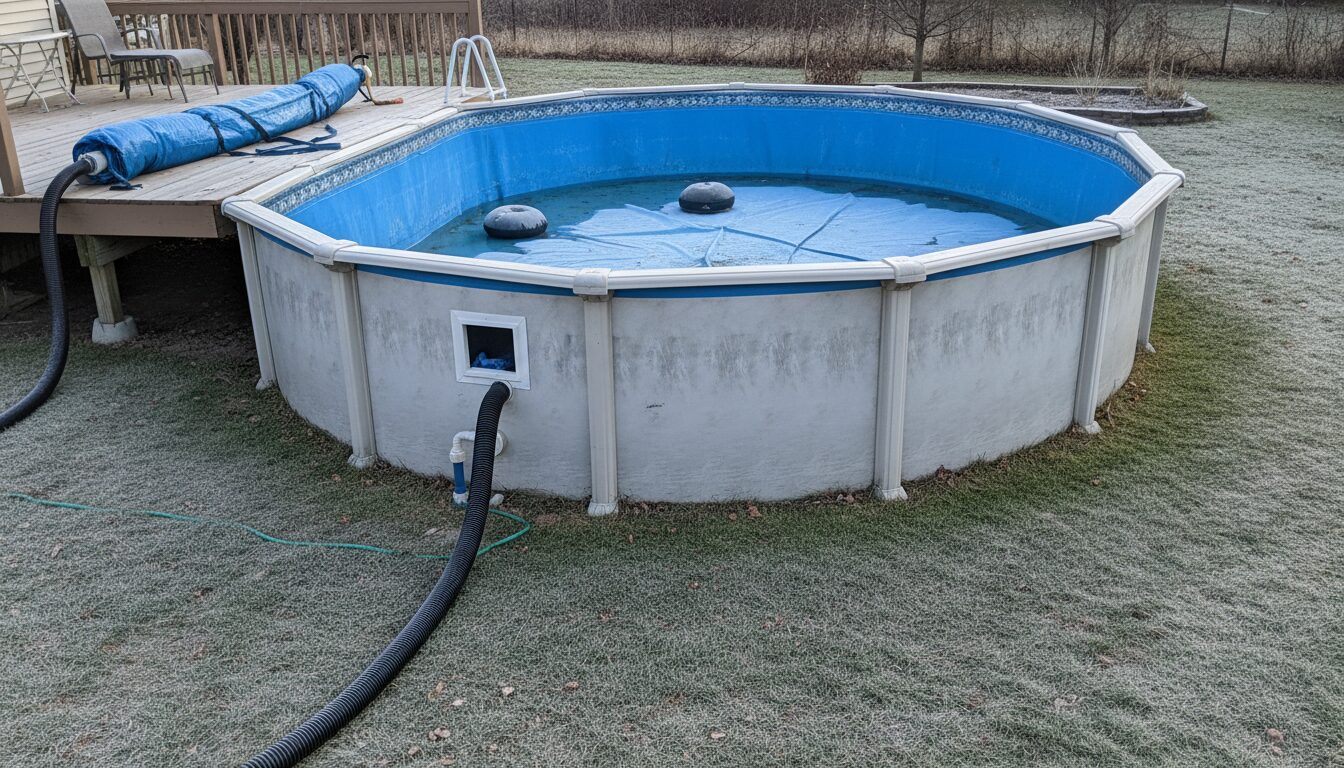

Every fall, someone ends up standing next to their above-ground pool with a garden hose drain adapter, wondering how far down to go before they stop. Drain too little and the skimmer cracks. Drain too much and the liner pulls away from the wall. The instructions that came with the pool were not much help, and the neighbor three doors down swears by a completely different number.
For an above-ground pool with a vinyl liner, drain the water to 4 to 6 inches below the bottom of the skimmer opening – no lower. That single rule covers the vast majority of pool closings in cold climates, and the rest of this article explains why that number works, what happens when you get it wrong, and a few variables that can shift it slightly in one direction or the other.
Why the Skimmer Sets the Target
The skimmer is the reason you drain at all. Any water left sitting inside the skimmer body over winter will freeze, expand, and crack the housing, the throat, or both. On an above-ground pool that damage often means the skimmer pulling away from the pool wall entirely, which turns a $30 part into a full wall-section repair. Dropping the water surface 4 to 6 inches below the skimmer opening guarantees the skimmer body is dry before the first hard freeze hits.
Once the skimmer is clear, you install a skimmer cover plate or a Gizzmo-style freeze plug directly into the skimmer throat. That plug acts as a sacrificial crumple zone: if any residual water does find its way in and freezes, the plug absorbs the expansion pressure instead of the skimmer wall. Colony Pool Service recommends this plug-and-lower approach as standard practice for any above-ground closing in a freeze-prone climate.
Why You Must Keep Most of the Water In
Here is the part that surprises a lot of first-time winterizers: the water is structural. On an above-ground pool, the liner is held against the wall by water pressure. Pull too much of that pressure away and the liner begins to contract, especially if temperatures drop before you get the cover on. A liner that shrinks away from the bead track in October may never re-seat cleanly in the spring, leaving you with a wrinkled, sagging mess that looks like, as your pool liner looks like a wavy blanket – and that’s a problem that gets expensive fast.
Beyond the liner, the water weight stabilizes the pool walls themselves against wind pressure and soil movement during freeze-thaw cycles. A drained above-ground pool is structurally vulnerable in a way an inground concrete shell simply is not. The goal is to protect the skimmer from ice while keeping enough water in place to do its job as ballast.
The Right Number: Worked Example
Say you have a standard 24-foot round above-ground pool with 52-inch walls and a standard through-wall skimmer. The skimmer opening sits at roughly 50 inches from the pool floor. Your target water level is 4 to 6 inches below that opening, which puts the surface at 44 to 46 inches. At 44 inches of depth in a 24-foot round pool, you are holding approximately 15,000 gallons out of a full capacity of roughly 17,000 gallons. You are draining only about 2,000 gallons – less than 12% of the pool’s total volume.
That number shocks people who think winterizing means draining the pool significantly. It does not. The skimmer dictates where you stop, and the skimmer sits close enough to the waterline that 4 to 6 inches is all you need. If you are unsure where your skimmer throat sits, measure from the pool floor up to the bottom edge of the skimmer opening with a tape measure before you start draining. Pool Repair Question’s guide on lowering water level for winterizing reinforces the same skimmer-referenced approach for both above-ground and inground pools.
Variables That Can Shift the Target Slightly
The 4-to-6-inch rule holds for most setups, but a few situations warrant a small adjustment:
- Return Fittings Near the Waterline: If your return eyeball sits at or just below the water surface at the target level, drop the water another inch or two so the return fitting is fully above the waterline. Ice inside a return fitting can crack it or blow out the wall fitting behind it.
- Solid Winter Cover vs. Mesh Cover: A solid cover will collect rain and snowmelt all winter, and that water weight pushes the cover down toward the pool surface. Some pool owners drop an extra inch or two so the accumulated water on top of the cover does not press the cover into the pool water and create pressure on the walls. A mesh cover drains through, so this is less of a concern.
- Air Pillow Under the Cover: An air pillow placed in the center of the pool helps absorb ice expansion pressure from the sides. It does not change your target water level at the skimmer, but it does reduce the stress the cover and pool wall experience as surface ice forms. Most above-ground pool owners in cold climates use one.
- Oval Pools With Side Rails: Oval above-ground pools have buttress supports on the sides that can shift or lean if the pool loses too much structural water pressure. Stay conservative and aim for the 4-inch end of the range rather than the 6-inch end.
JoCo Pools’ closing FAQ also notes that you should never drain below the point where the liner begins to lose contact with the bottom – a useful gut-check if you are watching the liner shift as water drops.
Comparing Water Level Strategies Side by Side
| Strategy | Water Level Target | Liner Risk | Skimmer Risk | Recommended? |
|---|---|---|---|---|
| Drain fully | 0 inches | Very high – liner shrinks and pulls | None | No |
| Drain halfway | ~26 inches (52″ wall) | High – liner loses wall contact | None | No |
| Leave at full level | At or above skimmer | Low | Very high – skimmer freezes | No |
| 4 to 6 inches below skimmer | ~44 to 46 inches (52″ wall) | Very low | Very low | Yes |
Why These Differences Matter
The table makes it clear that the risks pull in opposite directions. Drain too far and the liner suffers. Leave too much and the skimmer suffers. The 4-to-6-inch window threads that needle by protecting both. The key insight is that “winterizing” an above-ground pool is not the same as emptying it – it is about targeted draining to one specific reference point, the skimmer opening, and no further.
Common Mistakes to Avoid
The most frequent mistake is draining until the pool “looks low enough” rather than measuring from the skimmer. Eyeballing it almost always means going too far. The second most common error is skipping the skimmer freeze plug after draining correctly – even at 4 inches below the opening, a freak weather event can push water back toward the skimmer if there’s rain or snowmelt before freeze-up. Always plug the skimmer after you drain to the target level.
A third mistake is leaving the return line connected to the pump and filter without blowing it out first. Water trapped in the return line between the pool wall fitting and the pump can freeze and crack the pipe or the wall fitting itself. Blow out the return line with a shop vac or small compressor, then plug the wall fitting with a return winterizing plug before you put the cover on. For chemical prep before the cover goes on, AquaDoc makes a winterizing kit sized for above-ground pools that covers both the algaecide and the closing shock dose in one package – useful if you want to check that off the list in one step.
One more thing to think about before the cover goes on: a clean cover holds up dramatically better through the winter than one that goes on with debris already sitting on it. If your cover has seen a few seasons, it may already be harboring problems you cannot see – worth a quick look before you button things up for the year, since your winter cover may be holding more than just leaves.
Touched By The Sun Pools’ winter tips page is worth bookmarking for a full closing checklist that pairs well with the water-level work described here.
Frequently Asked Questions
How much water should I leave in an above-ground pool for winter?
Leave the water level 4 to 6 inches below the bottom of the skimmer throat. That clears the skimmer of standing water that could freeze and crack the housing, while keeping enough water in the pool to hold the vinyl liner firmly against the walls and floor through the winter months.
Can I drain my above-ground pool completely for winter?
No – draining an above-ground vinyl liner pool completely is one of the most reliable ways to ruin the liner before spring. Without the weight of the water pressing it outward, the liner contracts, pulls away from the bead track at the top, and develops wrinkles that may be permanent. Keep at least 80% of your water volume in place.
What happens if I leave too much water in an above-ground pool over winter?
If the waterline stays at or above the skimmer opening, water inside the skimmer will freeze during the first hard cold snap. Ice expansion can crack the skimmer body, split the throat, or rip the skimmer away from the pool wall entirely. Install a skimmer freeze plug and drop the level 4 to 6 inches below the opening to prevent this.
How low should I drain a 24-foot round above-ground pool with a vinyl liner?
On a 24-foot round pool with 52-inch walls, drain until the water surface sits at roughly 44 to 46 inches from the pool floor – 4 to 6 inches below the skimmer opening. At that depth you are holding approximately 15,000 gallons and only removing around 2,000 gallons from a full pool, less than 12% of total volume.
Do I need to drain more water if I’m using an air pillow under the winter cover?
No. An air pillow absorbs ice expansion pressure against the cover and pool wall but does not change your target water level at the skimmer. You still stop at 4 to 6 inches below the skimmer opening. The pillow is a complement to correct water level, not a reason to drain further.
The bottom line: for an above-ground pool with a vinyl liner, stop draining when the water surface is 4 to 6 inches below the skimmer opening, plug the skimmer, blow out the return line, and leave the rest of the water right where it is. That one measurement protects both the liner and the skimmer through whatever winter throws at you.