
You have drained your pool, the gunite shell is sitting exposed in the sun, and the plasterers are scheduled for next week. Now someone tells you that the surface needs to be etched with muriatic acid first, and you are standing there wondering how much to buy, how strong to mix it, and whether you are about to dissolve something you should not.
For a 20,000-gallon gunite pool with approximately 1,000 square feet of shell surface, you need between 15 and 25 gallons of standard 31.45% muriatic acid to complete a proper pre-plaster etch. That range covers light prep on relatively new plaster all the way to heavy-scale removal on a pool that has not been replastered in 15-plus years. The rest of this article explains how to calculate your specific amount, how to dilute and apply it safely, what the surface should look like when you are done, and what happens if you skip this step entirely.
Why Etching Matters Before New Plaster Goes On
New plaster does not bond well to a smooth, sealed surface. The acid etch opens up the micro-texture of the existing shell, giving the fresh plaster mechanical purchase so it grips rather than peels. Think of it like scuffing wood before you glue two pieces together: the rougher profile dramatically increases the contact area. Without etching, you risk delamination, map cracking, and premature plaster failure, sometimes within the first season.
On a gunite pool that has gone through several plaster coats over the years, there is also often calcium scale, efflorescence, and mineral buildup baked into the surface. The acid wash dissolves those deposits at the same time it opens the substrate, so the plasterers are starting with a chemically clean, mechanically receptive shell instead of a contaminated one.
How Much Muriatic Acid You Actually Need
The calculation is based on surface area, not water volume. A 20,000-gallon gunite pool is typically in the 15×30 to 16×36 foot range with an average depth around 5.5 feet. That works out to roughly 950 to 1,100 square feet of wetted shell surface, walls and floor combined. For planning purposes, use 1,000 square feet as your baseline.
The standard application rate for a pre-plaster etch is 1 to 1.5 gallons of full-strength muriatic acid per 50 square feet of surface, mixed into a working solution before application. At 1,000 square feet, that puts your pure acid requirement at 20 to 30 gallons. However, because you are diluting the acid before applying it (more on that below), and because you will be working in sections with some overlap and waste, the realistic purchase target for a 20,000-gallon pool is 15 to 25 gallons of acid at standard 31.45% concentration.
Here is a worked example. Say your pool is 16×32 feet with an average depth of 5 feet. Total shell surface: (16 x 32) for the floor plus perimeter walls, roughly 1,020 square feet. At 1 gallon of acid per 50 square feet, you need about 20 gallons of full-strength acid. Buy 22 gallons to give yourself a buffer for touch-up areas, tight corners, and steps, which often need a second pass. If you are curious how the total replastering picture fits together, the 12×24 Inground Pool Replaster Cost: Main Drain and Two Skimmers breakdown shows how acid prep fits into the full project timeline and budget.
Mixing Ratios and Dilution
Never apply full-strength muriatic acid directly to a gunite surface. It will cut unevenly, leave burn marks, and create a surface profile that is too aggressive for plaster to cover smoothly. Dilute first, always.
- Light etch (newer plaster, minimal scale): 1 part acid to 10 parts water. This is the right starting point for pools replastered within the last 10 years with no visible scale buildup.
- Standard etch (average condition, some mineral deposits): 1 part acid to 6 parts water. Most 20,000-gallon gunite pools that are overdue for replastering land here.
- Aggressive etch (heavy scale, old calcium deposits, staining): 1 part acid to 4 parts water. Use this only on heavily neglected shells where you can see thick white mineral crusting on the walls.
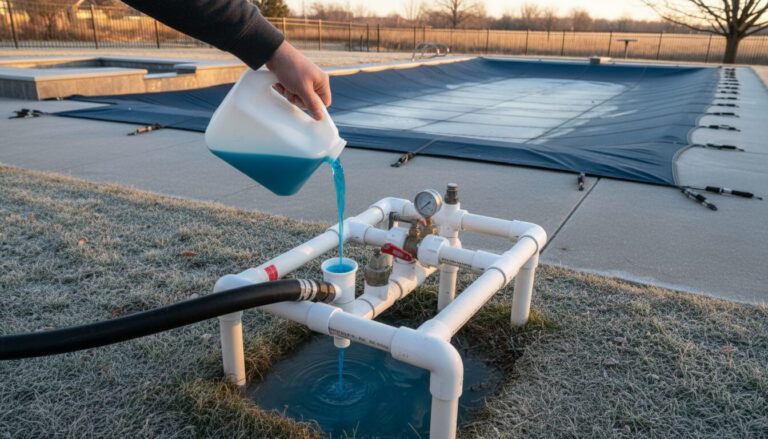
Always add acid to water, never water to acid. Pour the acid slowly into the bucket of water while stirring. This prevents the rapid exothermic reaction that can send a splash of concentrated acid back toward your face.
Step-by-Step Application Process
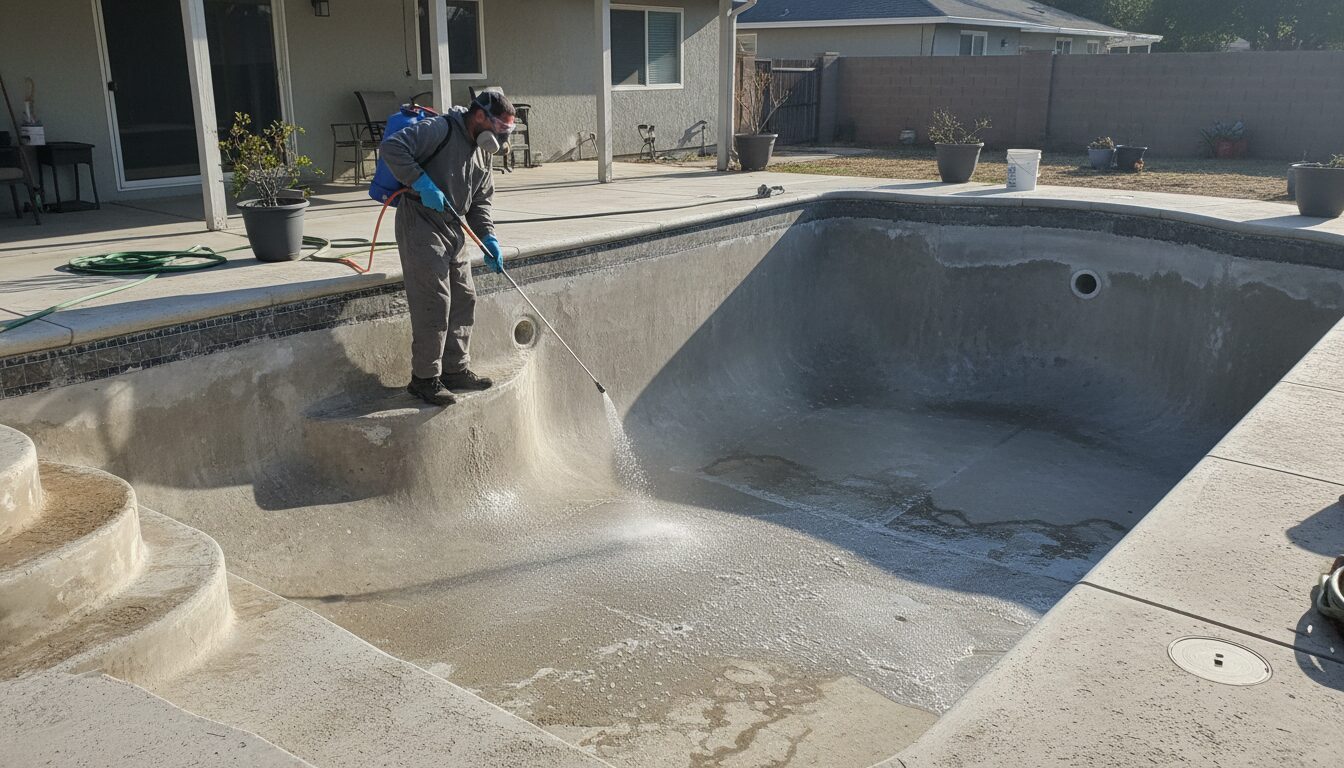
- Step 1: Gear up completely. Acid-resistant gloves, chemical splash goggles (not safety glasses), rubber boots, and old clothing you are prepared to discard. Have a water hose running nearby before you open the first jug.
- Step 2: Pre-wet the surface. Lightly mist the section you are working on with fresh water. A completely dry gunite surface absorbs acid unevenly; a damp surface lets it spread more uniformly.
- Step 3: Apply the diluted acid in 50 to 100 square foot sections. Use a plastic watering can or a pump sprayer rated for acids. Work from the top of the wall down toward the floor drain so runoff moves in one direction.
- Step 4: Watch for fizzing and time the dwell. Active fizzing means the acid is reacting with calcium carbonate in the plaster. Let it dwell for 3 to 5 minutes. If fizzing stops before 3 minutes, the section is clean and ready to rinse. If it is still going strong at 5 minutes, rinse anyway to prevent over-etching.
- Step 5: Rinse thoroughly. Flush each section with a full stream of water before moving to the next. Rinse twice if the fizzing was aggressive. Any acid left to dry on the surface will create uneven chemistry that the new plaster will reflect.
- Step 6: Neutralize the floor drain area. Mix a baking soda solution (1 lb per 5 gallons of water) and flush the drain collection area to neutralize residual acid before it enters the plumbing.
- Step 7: Inspect the finished surface. Run your hand across the shell. It should feel like fine sandpaper: uniform texture, no slick spots, no powdery crumbling. That is the surface profile your plasterers want.
Common Mistakes That Ruin the Etch
The biggest mistake is letting sections dry between application and rinsing. When diluted acid evaporates before rinsing, it concentrates back toward full strength in a thin film and etches unevenly, leaving visible tide lines under the new plaster. Keep water flowing throughout the job.
The second most common error is working in full sun on a hot day without pre-wetting. Surface temperatures above 90°F cause the acid solution to flash-evaporate in under two minutes, well short of the dwell time you need. If your pool is exposed to direct sun in summer, start the acid wash at dawn and work in sections small enough to rinse before the heat beats you.
Skipping the neutralization step at the drain is also a problem people overlook. Muriatic acid that sits in a gunite drain sump or PVC line can compromise the pipe fittings and throw off the chemistry of the first fill. AquaDoc makes a pH neutralizer specifically for this post-etch flush step, which pool owners on bigger jobs use to avoid sending raw acid through new plumbing.
Timing: How Soon After Etching Should Plaster Go On?
The etch and the new plaster application should happen within 24 hours of each other, and many plasterers prefer same-day. Once you have opened up the surface, the gunite is actively absorbing moisture from the air and any residual chemistry can start reacting. Beyond 24 hours, airborne dust, oils from foot traffic, and re-carbonation of the surface start to close the pores back down. If your plasterer is delayed, lightly re-wet the surface with fresh water (not acid) the morning of the application to keep it receptive.
What to Tell Your Plasterer
If your plastering crew is handling the etch themselves (which is common on full replaster contracts), share your pool’s surface history: how old the last plaster coat is, whether you had persistent calcium scale or staining, and whether any sections were previously patched. That information tells them whether to spec a 1:6 or 1:4 mix and how many passes the floor drain area needs. A good plasterer treats the etch as a craft step, not a chore, because they know the bond quality of everything they put on top depends on what the surface looks like below.
Frequently Asked Questions
How much muriatic acid do you need to etch a 20,000-gallon gunite pool before replastering?
For a standard 20,000-gallon gunite pool with roughly 1,000 square feet of shell surface, plan on 15 to 25 gallons of muriatic acid for the etch wash. The exact amount depends on the age and condition of the existing plaster: heavily scaled or aged surfaces need the higher end of that range.
What concentration of muriatic acid should you use for pool etching?
Use standard 31.45% muriatic acid diluted in a 1:10 ratio with water for a light etch, or 1:4 for a more aggressive cut on stubborn scale. Always add acid to water, never water to acid, to avoid a dangerous exothermic splash.
How long do you leave muriatic acid on a gunite pool shell?
Let the diluted acid dwell on the surface for 3 to 5 minutes. You should see visible fizzing as it reacts with the calcium in the old plaster. Rinse thoroughly with fresh water before the fizzing stops completely, which keeps the etch even and prevents the acid from cutting too deep.
Do you have to drain the pool before etching it?
Yes, the pool must be fully drained before an acid etch. The plasterers need a dry, exposed shell, and the acid needs direct contact with the gunite or old plaster surface to work. Never apply muriatic acid to a pool with water still in it.
Can you etch a gunite pool yourself before replastering, or should you hire a pro?
Technically you can do it yourself, but most plasterers prefer to handle the etch as part of their prep because they control the surface profile they are bonding to. If you do it yourself, coordinate closely with your plastering crew so the etch and new application happen within 24 hours of each other.
For a 20,000-gallon gunite pool, budget 15 to 25 gallons of 31.45% muriatic acid, dilute it to match your surface condition, work in small sections with plenty of rinse water, and hand the shell off to your plasterers within a day. That prep step is what separates a plaster job that lasts 15 years from one that starts flaking in three.