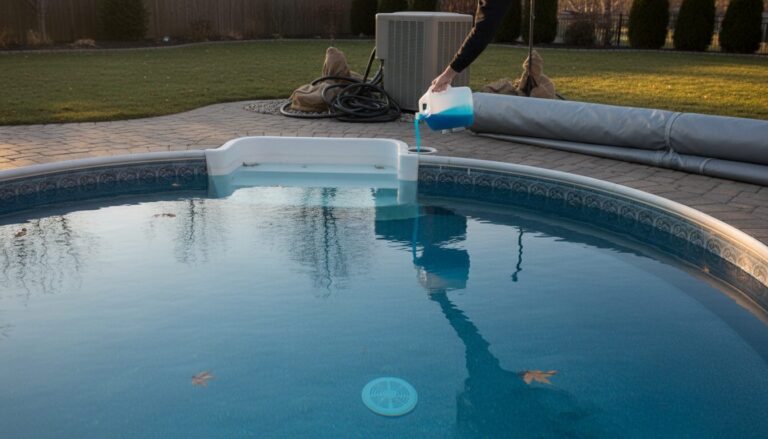
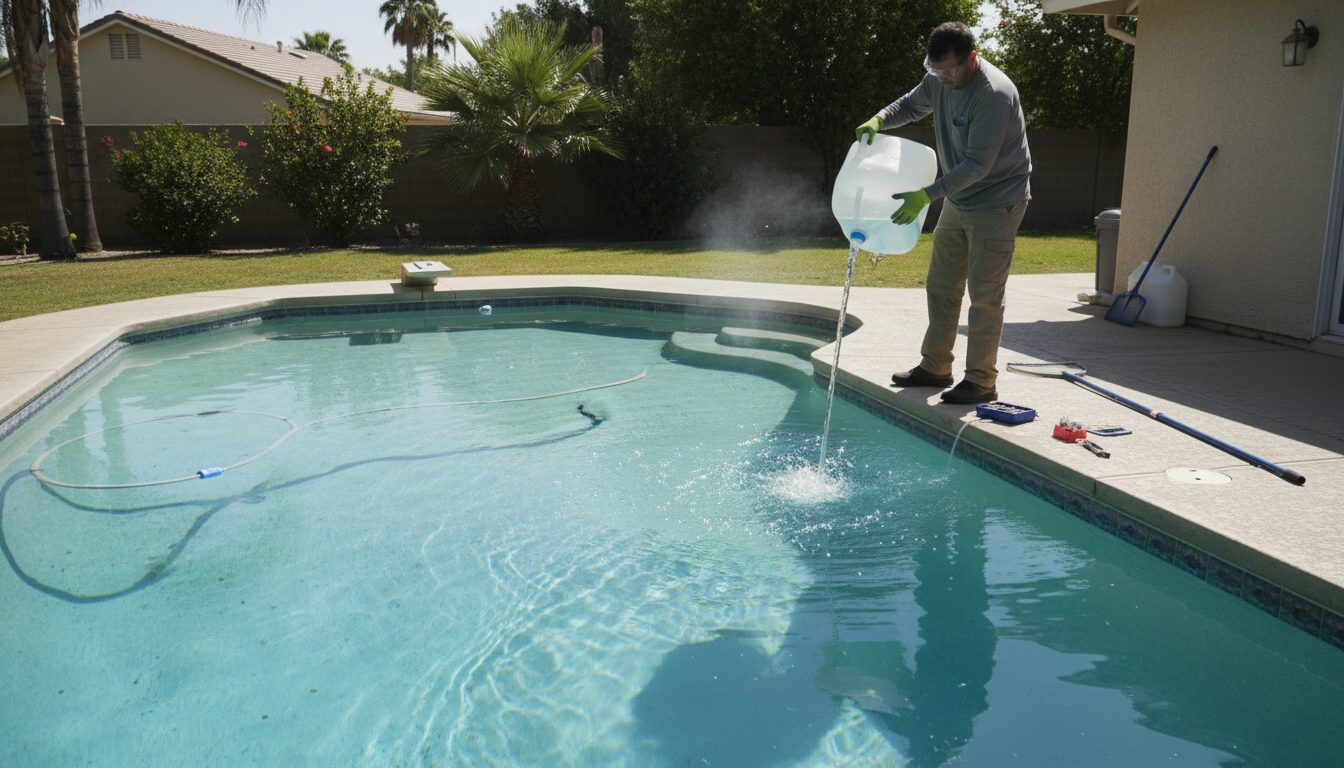

To lower pH and alkalinity in a 20,000-gallon pool before replastering, you typically need 1 to 1.5 quarts of 31.45% muriatic acid added in stages, with the pump running and water re-tested between doses. That assumes a starting pH around 8.0 and total alkalinity around 150 ppm, both of which are common in pools with high calcium hardness. The critical thing to understand upfront: muriatic acid does not lower calcium hardness itself. It lowers pH and alkalinity, which you need in the right range for the plaster crew. The calcium problem is solved by draining and refilling.
If you’ve been staring at a calcium hardness reading of 500, 600, or even 800 ppm and wondering what to pour in to fix it before the plasterers arrive, you’re not alone. It’s one of the most common pre-replaster miscalculations pool owners make. This article walks through why high calcium hardness matters before replastering, how to use muriatic acid correctly as part of your prep, how much to add with real numbers for a 20,000-gallon pool, and what your water should look like before the crew ever shows up.
Why High Calcium Hardness Is a Problem Before Replastering
New pool plaster is porous and reactive during the first days of cure. When you fill a freshly plastered shell with water that has calcium hardness above 400 ppm, the excess calcium in the water reacts with the plaster surface and can cause scaling, blotchiness, and an uneven cure. Most plaster contractors specify fill water below 300 to 400 ppm calcium hardness, and some set the bar even lower for white plaster finishes. If your existing pool water is at 600 or 700 ppm when you drain, that matters because mineral-laden scale on the gunite shell itself can interfere with plaster adhesion. As this breakdown on making pool plaster last longer explains, water chemistry during the initial fill and cure period has a direct impact on how many years the finish holds up.
The separate issue is that pools with chronically high calcium hardness almost always have elevated pH and total alkalinity too. Those two parameters are what muriatic acid actually fixes. Getting pH and alkalinity into the right range before you drain is part of a clean handoff to the plastering crew.
What Muriatic Acid Actually Does (and Does Not Do)
Muriatic acid (hydrochloric acid at 31.45% concentration, the standard pool grade) lowers both pH and total alkalinity. Add it slowly to a pool with the pump running and it drives pH down first, then gradually eats into alkalinity over the next few hours. It does not touch calcium hardness at all. Calcium ions stay dissolved in the water regardless of how much acid you add. If your calcium hardness is 700 ppm, it will still be 700 ppm after a full gallon of acid. The fix for calcium is water replacement, plain and simple.
What you can and should do with acid before replastering is bring pH down to 7.2 to 7.4 and total alkalinity down to 80 to 100 ppm. Those ranges are what most plaster manufacturers call for during the initial fill and cure period, and hitting them before you drain means less guesswork after the shell is plastered and you’re racing to fill it quickly.
How Much Muriatic Acid a 20,000-Gallon Pool Needs Before Replastering
The dose depends on where your water is starting from. Here’s a worked example using a realistic high-calcium pool scenario:
- Pool volume: 20,000 gallons
- Starting pH: 8.0
- Starting total alkalinity: 150 ppm
- Target pH: 7.2 to 7.4
- Target alkalinity: 80 to 100 ppm
To drop pH from 8.0 to 7.4 in 20,000 gallons with alkalinity at 150 ppm, you need roughly 1 quart (32 oz) of 31.45% muriatic acid as a first dose. Add it to the deep end with the pump running, wait 4 hours, then retest. If alkalinity is still above 110 ppm and pH is holding above 7.4, add another 8 to 16 oz. Total acid for this scenario typically lands between 40 and 48 oz (1.25 to 1.5 quarts) across two doses. Never add more than 1 quart at a single time in a 20,000-gallon pool, and never add acid directly in front of a return jet or near the skimmer throat.
If your starting alkalinity is higher, say 180 ppm, budget for a third smaller dose and allow an extra day. Alkalinity drops more slowly than pH because the buffering capacity of the water resists change. For a handy reference on target ranges across all your chemistry parameters, the Pool Chemical Balancing Cheat Sheet from Pool Sharp lays them out side by side.
Comparison: What Each Pre-Replaster Parameter Requires
| Parameter | Target Before Replaster | How to Fix It | Does Muriatic Acid Help? |
|---|---|---|---|
| pH | 7.2 to 7.4 | Add muriatic acid in stages | Yes, directly |
| Total Alkalinity | 80 to 100 ppm | Add muriatic acid, aerate if needed | Yes, indirectly |
| Calcium Hardness | Below 400 ppm (fill water) | Partial or full drain and refill | No |
| Cyanuric Acid | Not critical at drain-down | Drain and refill handles it | No |
Why These Differences Matter
Confusing these parameters is the most common mistake pool owners make heading into a replaster. pH and alkalinity are chemical balance issues that acid fixes in hours. Calcium hardness is a volume problem: too many calcium ions dissolved in too little water. If your calcium is at 650 ppm, you need to drain roughly 50% of the pool volume and replace it with lower-hardness water to get below 400 ppm. Some areas have naturally hard tap water (above 300 ppm straight from the hose), so check your fill water before you assume a simple refill solves it. For a full picture of how calcium hardness behaves at different levels, the Calcium Hardness in Pools: When It’s Too Low, Too High, and How to Fix It guide on this site is worth reading before you start draining.
Step-by-Step: Acid Treatment Before You Drain for Replastering
- Step 1: Test your water. Get a full panel: pH, total alkalinity, and calcium hardness. Use a reliable test kit or a strip matched to your pool type. Record all three numbers.
- Step 2: Calculate your acid dose. If pH is above 7.6 and alkalinity is above 110 ppm, start with 1 quart of 31.45% muriatic acid for a 20,000-gallon pool. Put on gloves, eye protection, and pour the acid into the deep end with the pump running.
- Step 3: Circulate for 4 hours. Let the pump run to distribute the acid fully before retesting. Never retest after only 30 or 60 minutes; the acid is still actively working.
- Step 4: Retest and adjust. If pH is 7.2 to 7.4 and alkalinity is 80 to 100 ppm, you’re done with acid. If either is still high, add another 8 to 16 oz and repeat. AquaDoc’s muriatic acid is a product pool owners use for exactly this kind of staged dosing because it comes in a measured 1-quart bottle that makes splitting doses practical.
- Step 5: Handle calcium hardness separately. If calcium is above 400 ppm, begin your partial or full drain now. For a 20,000-gallon pool at 600 ppm calcium, draining and replacing 8,000 to 10,000 gallons with 150 ppm tap water brings you to roughly 390 ppm, right at the edge of acceptable.
- Step 6: Confirm all parameters 24 hours before the crew arrives. Run the pump for a final 2-hour cycle, test one more time, and document the results for your contractor.
Common Mistakes to Avoid
- Adding too much acid at once: Overdosing in a single pour can drop pH below 7.0, which etches the existing plaster surface and gunite shell. Keep doses to 1 quart maximum per addition in a 20,000-gallon pool.
- Skipping the calcium test: Pool owners sometimes balance pH and alkalinity perfectly and still hand the crew a shell with 700 ppm calcium in the residual moisture on the surface. Test calcium and address it, even if it means a partial drain.
- Assuming hard water magically clears up: If your area’s tap water runs at 300 to 400 ppm, refilling after a 50% drain may not solve the problem. Talk to your plasterer about using a water softener for the initial fill.
- Adding acid the morning of the plaster job: Acid should be added and re-tested at least 24 hours before work begins. Fresh acid in an enclosed shell can irritate workers and interfere with the plaster mix. See also the guidance on calcium hardness targets and how to adjust them before you finalize your pre-drain plan.
Frequently Asked Questions
How much muriatic acid do I add to a 20,000-gallon pool with high calcium hardness before replastering?
The acid itself does not lower calcium hardness. You use muriatic acid to drop pH to 7.2 to 7.4 and total alkalinity to 80 to 100 ppm before draining, which helps the new plaster cure properly. A typical 20,000-gallon pool at pH 8.0 and alkalinity around 150 ppm needs roughly 1 to 1.5 quarts of 31.45% muriatic acid to hit those targets, added in stages with the pump running.
Does muriatic acid lower calcium hardness in a pool?
No. Muriatic acid lowers pH and total alkalinity, not calcium hardness. The only reliable way to reduce calcium hardness is to drain and refill some or all of the pool water with lower-hardness fill water. No chemical addition will remove dissolved calcium ions from the water.
What calcium hardness level is too high before replastering a gunite pool?
Most plaster contractors want calcium hardness below 400 ppm before they start work. Water above 600 ppm can cause the new plaster to cure unevenly and develop scaling or discoloration within the first few weeks after the fill. Confirm your contractor’s specific limit before draining.
How long should I wait after adding muriatic acid before draining a pool for replastering?
Run the pump for at least 4 hours after each dose of muriatic acid, then retest pH and alkalinity. Once both are in the target range (pH 7.2 to 7.4, alkalinity 80 to 100 ppm), you can begin the drain-down, but do not add acid within 24 hours of allowing workers into an empty shell.
What pH should a pool be at before replastering?
Most plasterers ask for pH between 7.2 and 7.4 at the time of drain-down. This range helps the new plaster surface bond correctly and reduces the risk of efflorescence or surface etching during the initial cure period. A pH below 7.0 can damage the existing shell and should be avoided.
For a 20,000-gallon pool with high calcium hardness heading into a replaster, use 1 to 1.5 quarts of muriatic acid in staged doses to bring pH to 7.2 to 7.4 and alkalinity to 80 to 100 ppm, then handle the calcium problem the only way it can be handled: drain and refill.