
Replastering a pool with a pebble finish at high altitude costs $10,000 to $22,000 for a typical inground pool in the 15,000 to 20,000-gallon range. That is a noticeably wider range than the national average for the same job at lower elevation, and the gap is not random. Altitude adds real costs through longer cure times, intense UV exposure, and the simple fact that experienced plaster crews often have to drive further to reach mountain communities.
If you have been collecting quotes and wondering why they vary so much, you are not imagining it. This article breaks down exactly what drives the price at elevation, what the finish grades actually cost, and what a realistic budget looks like for your pool so you can walk into contractor conversations knowing your numbers.
What You Are Actually Paying For With Pebble Finish
Pebble finish is not just plaster with rocks mixed in. It is a multi-layer system: a base coat of portland cement plaster goes on first, then a finish layer made of small natural or synthetic pebbles, quartz, or glass aggregate bonded in a cement matrix. The installer hand-trowels and water-blasts the surface to expose the pebble tops, which creates the texture and color you see. That labor-intensive exposure step is a big part of why pebble costs more than plain white plaster, which runs $5 to $7 per square foot installed, versus pebble’s $10 to $18 per square foot depending on grade.
The three main finish grades break down like this:
- Mini-pebble: Smallest aggregate, smoothest underfoot, $6 to $10 per square foot for material. Easiest to apply consistently, so labor costs are slightly lower.
- Standard pebble: Medium aggregate, the most common choice for residential pools, $8 to $13 per square foot for material. Good balance of durability and comfort.
- Premium pebble or glass bead blends: Larger aggregate or abalone and glass additions, $12 to $18 per square foot for material. These require more skilled application and command a labor premium.
How High Altitude Changes the Job
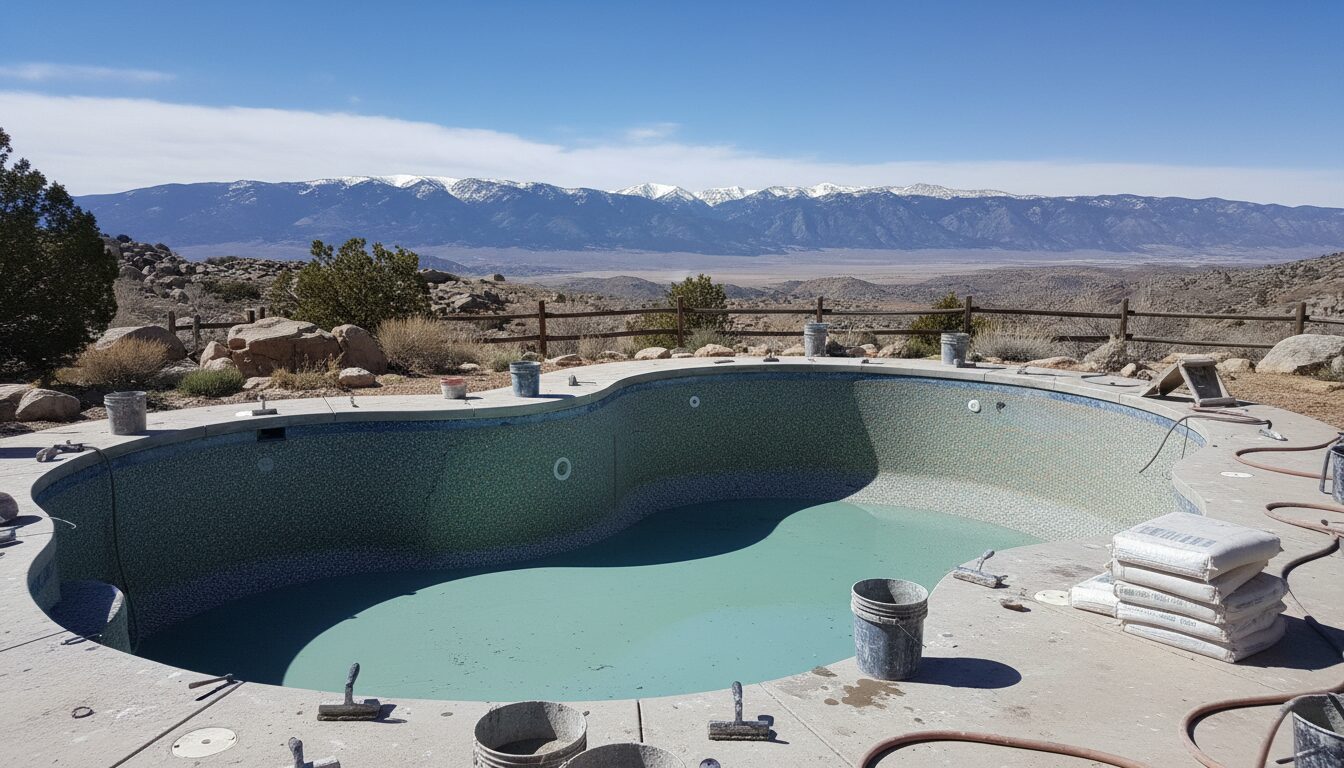
At elevations above 5,000 feet, atmospheric pressure drops and UV radiation intensity increases significantly. Both factors affect fresh plaster in ways that experienced low-elevation crews may not anticipate or account for. This is not a minor footnote. It is the core reason altitude projects cost more and why you want a contractor who has done high-altitude plaster work before.
- Faster water evaporation: Lower humidity and stronger UV mean the surface of fresh plaster can dry before it has fully cured. That causes shrinkage cracks and weak spots that fail early. Contractors compensate by misting more frequently or erecting shade structures, both of which add time and cost.
- Extended cure schedules: A properly managed high-altitude plaster cure can run 10 to 14 days instead of the 7-day standard. The crew may need multiple return visits to manage water chemistry and brush the surface during the startup period.
- Modified mix designs: Some contractors use admixtures or adjusted water-to-cement ratios to account for altitude. Those materials cost more and require more precise mixing.
- Contractor travel: Mountain communities often have few local plaster crews. Contractors driving from a lower-elevation metro area commonly add a mobilization fee of $500 to $1,500 per trip, and a multi-day job may require overnight stays that get billed back to you.
- UV exposure after cure: Even after the plaster is set, pools at 7,000 to 9,000 feet face UV levels roughly 25% higher than at sea level. This fades pigmented finishes faster. Darker pebble colors may need color-retention treatments more frequently than the same finish at lower elevation.
Full Cost Breakdown by Pool Size
Pebble replaster pricing is almost always quoted per square foot of interior surface, not by pool volume. A 20,000-gallon pool typically has around 550 to 650 square feet of interior surface depending on its depth profile. Here is what real project totals look like at high altitude when you add material, labor, altitude premiums, and the supporting work that always comes with a replaster:
| Pool Size (approx. gallons) | Surface Area (sq ft) | Standard Pebble (material + labor) | High-Altitude Premium | Total Installed Range |
|---|---|---|---|---|
| 12,000 to 15,000 gal | 350 to 450 sq ft | $7,000 to $11,000 | $1,000 to $2,500 | $8,000 to $13,500 |
| 15,000 to 20,000 gal | 450 to 600 sq ft | $9,000 to $15,000 | $1,500 to $3,500 | $10,500 to $18,500 |
| 20,000 to 30,000 gal | 600 to 800 sq ft | $12,000 to $18,000 | $2,000 to $4,000 | $14,000 to $22,000 |
Why These Numbers Matter for Your Budget
The altitude premium column is not a contractor upcharge you can negotiate away. It reflects real added hours on site and real materials consumed managing the cure. Where you can control cost is in the finish grade you choose and how much prep work you do before the crew arrives. Surface prep (draining the pool, chipping out cracked plaster, repairing coping) is sometimes quoted separately and can add $1,000 to $3,000 if the existing surface is in rough shape.
Say your pool holds 18,000 gallons and has about 530 square feet of interior surface. At a mid-range standard pebble rate of $22 per square foot installed (material plus labor at high altitude), you are looking at roughly $11,660 just for the finish. Add draining and refilling ($200 to $400 for water), startup chemicals for the new plaster ($150 to $300), and a mobilization fee of $800, and the realistic all-in total lands between $13,000 and $15,000. That worked example gives you a sanity check when quotes come in.
If your pool also has a wading area, raised spa, or attached water feature, those surfaces add square footage and complexity. A project like that is covered in depth in this 16×32 inground pool with wading pool replaster cost breakdown, which walks through how attached features change the total.
The Chemical Startup Phase at High Altitude
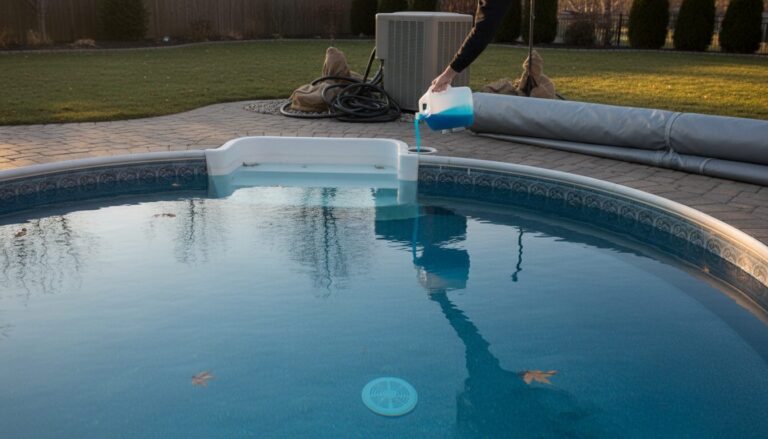
Fresh pebble plaster leaches calcium and raises pH aggressively in the first two to four weeks. At altitude, that process is slightly more unpredictable because fill water chemistry varies more in mountain areas. You need to test pH and alkalinity daily for at least the first week and keep pH between 7.2 and 7.8 and alkalinity between 80 and 120 ppm. Letting pH spike above 8.0 during plaster startup leaves calcium scale on the pebble surface that is very difficult to remove without damaging the finish.
AquaDoc makes a plaster startup kit that pool owners use to manage this phase without guessing at doses. Having the right acid and alkalinity products on hand before the crew even leaves the job site is worth the preparation. Keeping a log of daily readings during the first 10 days also protects your warranty if the contractor requires documentation of proper startup.
For pools at high altitude that are also smaller in volume, the chemical ratios shift. The replaster cost and startup process for a compact inground pool are covered in this 12×24 inground pool replaster cost guide with main drain and two skimmers, which is a useful reference if your pool is on the smaller end of the range.
Common Mistakes That Inflate the Final Bill
Getting three quotes sounds obvious, but many mountain pool owners skip it because there are only one or two local contractors. Expanding your search radius by 50 to 75 miles and asking candidates specifically about their high-altitude plaster experience can save $2,000 to $4,000. Ask each bidder how they manage the cure in low humidity and UV conditions and what their startup protocol is. A contractor who does not have a specific answer has probably not done many jobs at elevation.
Another common mistake is delaying the fill after plaster application. Fresh plaster must be filled immediately after the crew finishes, ideally within two hours. At altitude, the drying window is even shorter. If you are not ready with water and chemicals the day the crew finishes, you risk a surface that cures unevenly and voids the warranty.
Frequently Asked Questions
How much does it cost to replaster a pool with a pebble finish?
Pebble finish pool replaster costs $10,000 to $22,000 for a standard inground pool, depending on pool size, pebble grade, and regional labor rates. High-altitude locations typically add $1,500 to $4,000 to that baseline because of longer cure schedules, UV exposure, and contractor travel costs.
Why does high altitude make pool replastering more expensive?
At elevations above 5,000 feet, lower atmospheric pressure slows plaster curing and increases water evaporation during the wet cure phase. Contractors must extend their on-site time, use modified mix designs, and sometimes shade or tent the pool to control the cure environment. All of that adds to the final labor bill.
How long does pebble finish last in a high-altitude pool?
A pebble finish applied correctly at high altitude typically lasts 15 to 25 years before it needs to be refinished. That is longer than standard white plaster, which averages 7 to 15 years, because the aggregate surface resists the UV radiation that is more intense at elevation. Proper startup chemistry and ongoing water balance extend the life even further.
What size pool replaster are these costs based on, and how does size change the price?
The $10,000 to $22,000 range applies to pools roughly 15,000 to 20,000 gallons, which is about 450 to 600 square feet of interior surface. Smaller pools, like a 12×24 inground, can come in under $10,000, while larger pools with deep ends, spas, or wading areas can push past $25,000 at high altitude.
What is the cheapest pebble finish option for a pool replaster?
Mini-pebble or small-aggregate finishes are the most affordable pebble option, typically running $6 to $10 per square foot for the finish material alone before labor. Standard pebble runs $8 to $13 per square foot, and premium large-aggregate or glass-bead blends can reach $15 to $18 per square foot before labor. At high altitude, add $3 to $6 per square foot for the labor adjustments described above.
Pebble finish at high altitude is a $10,000 to $22,000 project for most inground pools, and the altitude premium of $1,500 to $4,000 is real and non-negotiable. Choose your finish grade based on budget, get quotes from contractors with documented high-altitude experience, and have your startup chemicals ready the day the crew walks off the job.